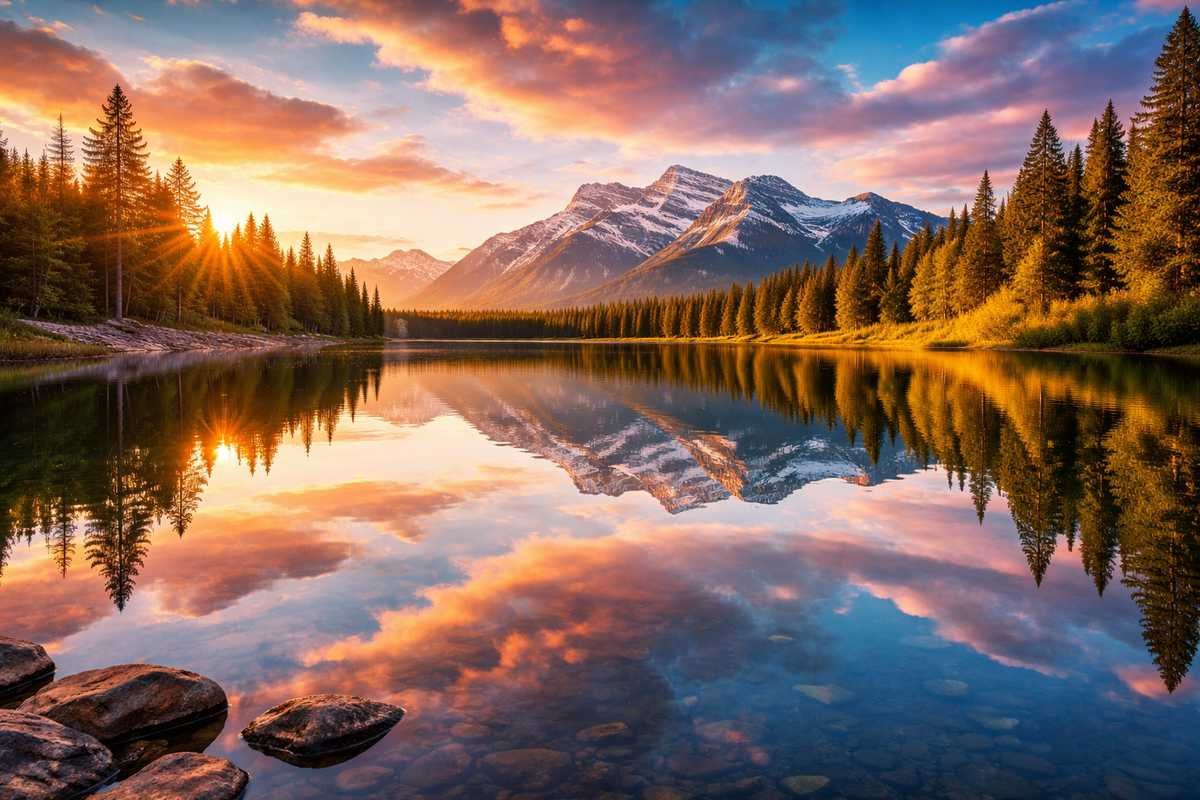
Water reflection is a natural optical phenomenon that occurs when light rays strike the surface of water and bounce back toward the observer. This effect allows water bodies to mirror surrounding objects such as landscapes, buildings, skies, and vegetation. The clarity of the reflection depends on factors like surface smoothness, light angle, and environmental conditions. Calm water produces sharp reflections, while disturbed water scatters light and reduces visual clarity.
The Physics Behind Reflection on Water Surfaces
Reflection follows fundamental laws of physics, particularly the law stating that the angle of incidence equals the angle of reflection. When light hits a smooth water surface, it reflects predictably, creating mirror-like images. If the surface is rippled, the reflected rays scatter in multiple directions, distorting the image. This scientific principle explains why still lakes create clearer visuals than flowing rivers or oceans.
Types of Reflections Observed in Water
There are multiple reflection types observable on water surfaces. Specular reflection occurs on calm, smooth water and produces clear, defined images. Diffuse reflection appears when water is disturbed, causing light to scatter and soften visual details. Understanding these types helps in analyzing natural environments and interpreting visual patterns in aquatic settings.
Environmental Factors That Influence Reflection Quality
Wind speed, temperature, water depth, and surface tension all influence how reflections appear. Low wind conditions allow water surfaces to remain smooth, enhancing mirror effects. Shallow waters may reveal underwater textures that interfere with reflection clarity. Seasonal variations also affect light intensity and angle, altering reflective outcomes throughout the year.
The Role of Light Angle and Sun Position
The position of the sun plays a critical role in how reflections appear on water. Lower sun angles during early morning or late afternoon create longer reflection paths and richer contrast. When the sun is high, reflected light tends to be harsh and less defined. This explains why reflective visuals are more prominent during sunrise and sunset periods.
Water Reflection in Natural Landscapes
Lakes, ponds, wetlands, and slow-moving rivers commonly display prominent reflective properties. Mountain lakes often provide the clearest mirrored imagery due to minimal wind exposure and protected terrain. Wetlands, although shallow, can create striking visual layers by reflecting skies while revealing vegetation beneath the surface.
Reflection in Urban and Architectural Environments
In cities, water features such as fountains, canals, and artificial pools contribute to visual symmetry by reflecting architectural elements. Urban planners often incorporate reflective water surfaces to enhance spatial perception and aesthetic balance. These reflections can visually expand spaces and introduce natural light dynamics into built environments.
Impact of Water Movement on Visual Distortion
Even minor surface motion can significantly alter reflection appearance. Gentle ripples create abstract patterns, while strong currents completely disrupt image formation. Understanding this relationship is essential when analyzing water bodies for environmental studies or visual documentation purposes.
The Importance of Surface Tension and Cleanliness
Surface tension allows water to maintain smoothness, which is essential for reflection clarity. Pollutants, debris, or oil films disrupt surface cohesion and degrade reflective quality. Clean water surfaces are therefore more capable of producing accurate visual reflections, highlighting the environmental importance of water conservation.
Seasonal and Weather-Based Reflection Variations
Different seasons bring changes in sunlight angle, cloud cover, and water temperature. Winter may offer clearer reflections due to calmer air conditions, while summer introduces more surface movement. Cloudy skies diffuse light, softening reflections, whereas clear skies produce sharper mirrored imagery.
Applications of Water Reflection in Scientific Observation
Scientists use reflective properties of water to study atmospheric conditions, light behavior, and environmental changes. Reflection patterns can indicate wind direction, surface contamination, or water movement. These observations support climate research, ecological monitoring, and hydrological studies.
Psychological and Visual Perception Effects
Reflections on water influence human perception by creating symmetry and visual balance. The human brain often interprets reflected images as calming and harmonious. This effect is why reflective water environments are commonly associated with relaxation and mental well-being in environmental psychology.
Cultural and Historical Significance of Reflections
Across cultures, reflective water surfaces have symbolized clarity, balance, and introspection. Ancient civilizations designed gardens and temples around pools to capture reflections, enhancing spiritual and architectural meaning. This long-standing cultural relevance demonstrates the universal appeal of mirrored water imagery.
Common Challenges in Observing Clear Reflections
Environmental disturbances such as wind, rain, or pollution reduce reflective clarity. Artificial lighting can also interfere with natural light angles, altering visual outcomes. Recognizing these challenges helps in understanding why ideal reflective conditions are relatively rare and often temporary.
Technological Use of Reflection Analysis
Modern technology uses water reflection analysis in satellite imaging and remote sensing. Reflected light data helps determine water quality, depth, and surface conditions. These techniques play a critical role in environmental monitoring and disaster management.
Reflection and Optical Illusions in Water
Water surfaces can create optical illusions by altering perceived object size, shape, or distance. Refraction combined with reflection can make objects appear closer or distorted. Understanding these illusions is important in navigation, engineering, and visual interpretation.
Conservation and Its Effect on Reflective Environments
Protecting water bodies ensures the preservation of their reflective qualities. Pollution control, shoreline management, and sustainable water use all contribute to maintaining clean surfaces. Conservation efforts directly influence how natural reflections can be observed and studied.
Future Research and Environmental Importance
Ongoing research continues to explore how climate change affects reflective water environments. Rising temperatures, increased storms, and changing wind patterns alter surface behavior. Studying these changes provides insight into broader environmental shifts and ecosystem health.
(FAQs)
What causes reflections to appear clearer on calm water?
Calm water has a smooth surface that reflects light uniformly, producing sharper images.
Why do reflections look different at sunrise and sunset?
Lower sun angles create longer light paths and softer illumination, enhancing reflection visibility.
Can polluted water still produce reflections?
Pollution disrupts surface tension, reducing clarity and distorting reflected images.
Do all water bodies reflect light the same way?
No, depth, movement, and surface conditions cause significant variation in reflection behavior.
Why are reflections important in environmental studies?
They help scientists analyze water quality, surface conditions, and atmospheric interactions.