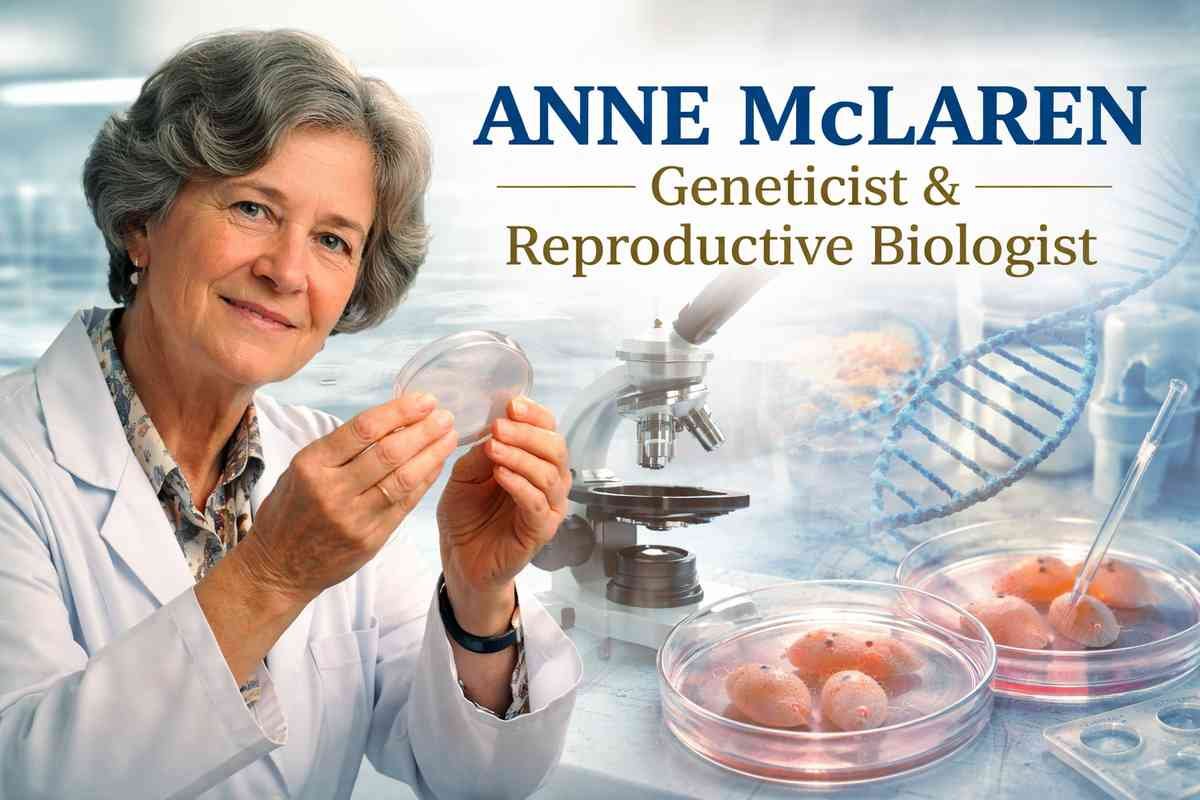
Anne McLaren was one of the most respected scientists in the field of developmental biology and genetics. Her work transformed scientific understanding of how life begins, develops, and survives at its earliest stages. Through decades of research, she helped establish the biological foundations that support modern fertility treatments, embryo research, and reproductive medicine. Her career is remembered for intellectual depth, ethical responsibility, and lasting scientific influence.
Early Life and Educational Background
Born in London in 1927, Anne McLaren grew up in an environment that encouraged learning, curiosity, and independent thinking. From a young age, she showed strong academic ability and a deep interest in understanding how the natural world functions. She later attended the University of Oxford, where she studied zoology. This academic foundation introduced her to embryology and genetics, subjects that would define her lifelong scientific work.
Entry into Developmental Biology
During her university and early research years, she became fascinated by how complex organisms develop from a single fertilized cell. At the time, developmental biology was still evolving as a scientific discipline. She chose to focus on mammalian development, particularly the role of genes and environmental conditions during early embryonic growth. This decision placed her at the center of one of the most important biological research areas of the twentieth century.
Focus on Mammalian Embryo Development
A major portion of her research examined how mammalian embryos grow during the earliest stages of life. By conducting carefully controlled experiments, she demonstrated that embryos could survive and develop outside the mother’s body for a limited period. This discovery challenged long-standing assumptions and opened new scientific pathways for studying reproduction under laboratory conditions.
Scientific Importance of Her Embryology Research
Her work provided clear evidence that early development depends on both genetic instructions and external biological conditions. This insight changed how scientists approached fertility, pregnancy, and embryo health. It also allowed researchers to observe developmental processes that were previously hidden, leading to more accurate scientific models of early life.
Role in Advancing Reproductive Science
Although she did not directly perform medical procedures, her research played a crucial role in advancing reproductive science. Her findings helped scientists understand implantation, embryo survival, and early cellular differentiation. These discoveries later became essential for improving assisted reproductive techniques and understanding fertility challenges.
Contribution to In Vitro Fertilization Foundations
The scientific groundwork behind in vitro fertilization relied heavily on her experimental discoveries. By proving that embryos could develop normally outside the womb, she provided biological validation for laboratory-based fertilization. This knowledge helped clinicians refine IVF procedures, making them safer and more effective over time.
Influence on Stem Cell Research
Her studies of early embryos also influenced the development of stem cell science. By observing how cells specialize during development, she helped clarify how undifferentiated cells gain specific biological roles. These principles now guide modern stem cell research and regenerative medicine, including tissue repair and disease modeling.
Leadership in Research Institutions
Throughout her career, she held leadership positions in major scientific organizations. In these roles, she guided research priorities, supported interdisciplinary collaboration, and encouraged high scientific standards. Her leadership helped shape national research strategies and ensured long-term investment in biological science.
Commitment to Scientific Ethics
Anne McLaren was deeply committed to ethical responsibility in science. As reproductive technologies advanced, she actively participated in discussions about moral limits, public accountability, and responsible regulation. She believed scientific progress must always be accompanied by transparency and societal trust, especially when research involves human life.
Public Engagement and Science Communication
She strongly believed that scientists should communicate clearly with the public. Through lectures, writings, and advisory roles, she explained complex scientific topics in accessible ways. Her ability to bridge science and society helped reduce public misunderstanding and build confidence in responsible scientific research.
Advocacy for Women in Science
Beyond her research achievements, she was a strong advocate for women in scientific careers. She openly addressed the challenges faced by women in academic and research institutions and worked to create more inclusive professional environments. Her leadership helped inspire greater female participation in science at senior levels.
Influence on Science Policy
Her expertise was frequently sought by policymakers addressing reproductive health and biotechnology. She contributed to national and international advisory committees, helping shape guidelines that balanced innovation with ethical responsibility. Her policy contributions ensured that scientific advances were carefully evaluated before widespread application.
Recognition and Professional Honors
Throughout her career, she received numerous honors acknowledging her scientific contributions and leadership. These recognitions reflected her impact across multiple disciplines and her reputation as a thoughtful, principled scientist. Her achievements continue to be respected within the global scientific community.
Educational and Mentorship Legacy
As a mentor, she encouraged critical thinking, independence, and ethical awareness among young scientists. Many of her students and collaborators later became influential researchers themselves. Her mentorship multiplied her impact, extending her influence far beyond her own laboratory work.
Long-Term Impact on Modern Biology
The experimental methods and scientific principles she developed remain central to modern biology. Research in fertility, genetics, embryology, and regenerative medicine continues to rely on frameworks she helped establish. Her work remains relevant as new technologies explore the earliest stages of human development.
Relevance in Today’s Medical Advances
Modern reproductive medicine, fertility preservation, and embryo research still reflect her scientific insights. As medical technology becomes more advanced, her emphasis on careful experimentation and ethical oversight remains a guiding standard for researchers worldwide.
Conclusion:
Anne McLaren represents the ideal balance between scientific innovation and ethical responsibility. Her work reshaped reproductive biology, supported life-changing medical advances, and strengthened public trust in science. Her legacy continues to influence research, policy, and education, making her one of the most important figures in modern biological science.
More Details : This City Is Ours: Sean Bean Returns with a Gritty Crime Thriller That Owns Every Street
FAQs
Who was Anne McLaren?
She was a British developmental biologist whose research transformed understanding of early mammalian development.
Why is Anne McLaren important in reproductive biology?
Her work provided the scientific foundation for studying embryos outside the womb and advancing fertility research.
Did Anne McLaren contribute to IVF research?
Yes, her experiments helped establish the biological principles that made IVF possible.
Was Anne McLaren involved in ethics?
She actively participated in ethical discussions related to reproductive technology and scientific responsibility.
What is Anne McLaren’s lasting impact?
Her research continues to influence genetics, fertility medicine, stem cell science, and science policy today.