Infidelity is one of the most discussed and controversial topics in modern relationships. It challenges trust, tests loyalty, and often reshapes how people view love and commitment. The question “who cheats more men or women” has long sparked curiosity among psychologists, sociologists, and the general public. While statistics shed some light, the reasons behind cheating are far more complex than gender alone.
This article explores data-driven insights, psychological factors, and social dynamics to understand the patterns of infidelity without bias, myths, or stereotypes.
Understanding Infidelity in Modern Relationships
Before analyzing who cheats more, it’s essential to define what cheating means. Infidelity can take many forms physical, emotional, online, or even financial. Some people view flirting as cheating, while others limit the definition to sexual contact.
According to research published by the Institute for Family Studies, about 20% of married men and 13% of married women have admitted to cheating at least once. However, these numbers don’t tell the full story. Factors like age, opportunity, relationship satisfaction, and even cultural norms play a significant role in influencing infidelity.
Historical Trends in Cheating: How Times Have Changed
In the past, men were statistically more likely to cheat. This trend was often explained by traditional gender roles — men had more social freedom, financial independence, and opportunities to engage outside the home. Women, on the other hand, faced greater social and economic consequences for infidelity.
However, in recent decades, the gap has narrowed significantly. As women gained financial independence, social freedom, and access to digital communication, the rate of female infidelity increased. Modern studies indicate that younger generations show smaller gender gaps in cheating compared to older ones.
So when people ask, “who cheats more men or women,” the answer is shifting it depends on the generation and context.
Why Men Cheat: Psychological and Social Factors
Men often report different motivations for cheating than women. Several studies suggest the following factors are most influential among men:
- Sexual Dissatisfaction: Many men who cheat claim they do so because of a lack of physical intimacy or sexual excitement in their relationship.
- Ego and Validation: Some men seek validation, wanting to feel desired, admired, or powerful.
- Opportunity and Risk: Statistically, men tend to have more opportunities for infidelity, especially in environments where they interact with many people or travel frequently.
- Emotional Disconnection: While less commonly cited than sexual reasons, emotional neglect can also drive men toward infidelity.
In many cases, cheating isn’t just about sex it’s about unmet needs, both emotional and physical, coupled with opportunity.
Why Women Cheat: Emotional and Psychological Motivations
Women’s reasons for cheating are often more emotionally rooted. While generalizations should be made cautiously, research highlights some common patterns:
- Emotional Dissatisfaction: Many women report feeling emotionally ignored or undervalued in their relationships. Cheating becomes an escape to find emotional fulfillment.
- Lack of Intimacy: When emotional or sexual needs go unmet for extended periods, some women seek connection elsewhere.
- Neglect and Loneliness: A partner’s absence emotionally or physically often triggers feelings of isolation.
- Desire for Novelty or Adventure: Just like men, some women cheat for excitement, curiosity, or attention.
Interestingly, women are statistically more likely to cheat when they are unhappy in their relationships, while men sometimes cheat even when they are content.
The Role of Technology in Modern Infidelity
Digital communication has transformed how cheating occurs. Social media, messaging apps, and dating platforms have blurred boundaries. Emotional affairs often start online, where secrecy and fantasy thrive.
Apps like Tinder or Instagram make it easier than ever to reconnect with past partners or meet new people discreetly. Studies show that nearly 30% of emotional affairs begin online, sometimes evolving into physical encounters later.
Technology doesn’t create infidelity but amplifies accessibility and temptation. In this digital era, both men and women are equally exposed to opportunities to stray, further complicating the question of who cheats more men or women.
Age and Infidelity: Generational Differences
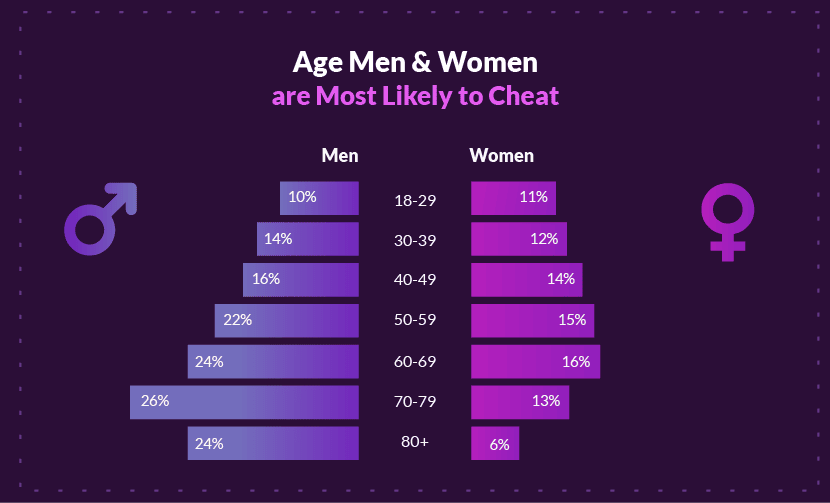
Cheating patterns vary by age group. According to multiple surveys:
- Men aged 40–59 are most likely to report cheating.
- Women’s cheating rates peak slightly younger, between ages 30–49.
- Among people under 30, the gender gap is nearly nonexistent.
Older generations often faced greater social consequences for infidelity, particularly women. In contrast, younger people — shaped by more open attitudes toward relationships and sexuality show more gender-balanced rates of cheating.
This generational shift reveals that infidelity is becoming less about gender and more about personal choice and relational context.
Cultural and Social Influences on Cheating
Culture shapes how people view and experience infidelity. In some societies, male cheating is normalized or even tolerated, while female infidelity is harshly judged. In others, both genders face equal moral condemnation.
Western cultures tend to emphasize romantic love and personal fulfillment, which can sometimes lead individuals to seek satisfaction outside a stagnant relationship. In more conservative or collectivist cultures, loyalty and social reputation act as stronger deterrents.
Global research shows that cultural acceptance and religious influence significantly impact cheating rates — often more than gender does.
Emotional vs. Physical Infidelity: A Gendered Divide?
Studies consistently reveal that men and women react differently to emotional and physical infidelity.
- Men tend to be more distressed by sexual infidelity, perhaps due to evolutionary concerns about paternity.
- Women often find emotional infidelity more painful, as it signals loss of emotional exclusivity.
This difference doesn’t mean one gender cheats more; rather, it shows that the types of cheating and motivations differ. When evaluating who cheats more men or women, both types must be considered equally.
The Emotional Aftermath: Consequences of Cheating
Cheating rarely leaves relationships unscarred. Betrayal leads to loss of trust, guilt, emotional pain, and often relationship dissolution. However, not all relationships end after infidelity. Some couples choose therapy, while others redefine boundaries.
Research suggests women are slightly more likely than men to end a relationship after discovering infidelity. Men, on the other hand, are more likely to continue an affair or seek reconciliation without full disclosure.
The emotional recovery process depends not only on gender but also on communication, honesty, and willingness to rebuild.
Can Relationships Survive Infidelity?
Despite the devastation cheating causes, many couples manage to rebuild trust. Therapy, open communication, and transparency play vital roles in recovery. The process can take months or even years, but some relationships emerge stronger after confronting their weaknesses.
The key lies in identifying the underlying cause — emotional neglect, dissatisfaction, or loss of intimacy — and addressing it directly. Forgiveness does not mean forgetting; it means acknowledging pain while committing to healing.
What the Statistics Really Tell Us
When evaluating who cheats more men or women, here’s a summary of what modern research shows:
- Men still cheat slightly more, but the gap is narrowing.
- Among younger generations, rates are almost equal.
- Motivations differ: men often cite sexual variety, while women emphasize emotional disconnection.
- Opportunity and dissatisfaction remain primary triggers for both genders.
Therefore, rather than focusing solely on gender, experts encourage people to understand why infidelity occurs. The answer lies in emotional needs, personal values, and relationship dynamics not gender alone.
The Future of Fidelity: Changing Attitudes and Relationships
As society evolves, so do ideas about relationships. Open relationships, polyamory, and emotional transparency are changing how people define commitment. The stigma around discussing infidelity has lessened, allowing couples to address issues before they escalate.
Education about emotional intelligence, healthy communication, and digital boundaries is helping reduce cheating in committed partnerships.
Ultimately, understanding who cheats more men or women is less important than understanding why people cheat and how trust can be rebuilt.
Conclusion
The debate over who cheats more men or women may never have a definitive answer. While statistics suggest men historically cheat more, the gap is closing as societal norms shift.
Infidelity is not a gender issue — it’s a human behavior influenced by emotion, opportunity, dissatisfaction, and communication breakdowns. By focusing on understanding and prevention rather than blame, couples can build healthier, more transparent relationships in the modern world.
More Details : 15 Red Flags in Men: Signs You Shouldn’t Ignore in a Relationship
FAQs
1. Who cheats more, men or women?
Statistically, men cheat slightly more, but recent studies show the gap is shrinking, especially among younger generations.
2. Why do men cheat more often?
Men often cheat for reasons related to sexual dissatisfaction, ego, or opportunity rather than emotional disconnection.
3. Why do women cheat?
Women primarily cheat due to emotional neglect, lack of connection, or feeling undervalued in a relationship.
4. Are emotional affairs as serious as physical ones?
Yes. Emotional infidelity can be equally or even more damaging, as it breaks trust and emotional intimacy.
5. Can a relationship recover after cheating?
Yes, with commitment, communication, and therapy, many couples can rebuild trust and heal from infidelity.