Short poems have an undeniable power they express the deepest feelings in the fewest words. With just a few lines, a poet can describe love, loss, nature, or hope so vividly that the reader feels it instantly. Unlike long verses, short poems leave space for the imagination; they make every word count and every pause meaningful.
In this article, we’ll explore 27 short poems from some of the greatest poets of all time from Emily Dickinson to Langston Hughes and see why their words still inspire millions today.
Why Short Poems Are Timeless
Short poems have survived centuries because of their emotional honesty and simplicity. They remind us that beauty doesn’t always need complexity. A haiku of three lines, or a sonnet fragment of four, can capture what entire essays cannot.
Whether it’s a line about morning dew, a single heartbeat of love, or a reflection on life’s fragility short poetry turns small thoughts into lifelong wisdom.
27 Famous and Inspiring Short Poems of All Time
1. Emily Dickinson – “Hope is the Thing with Feathers”
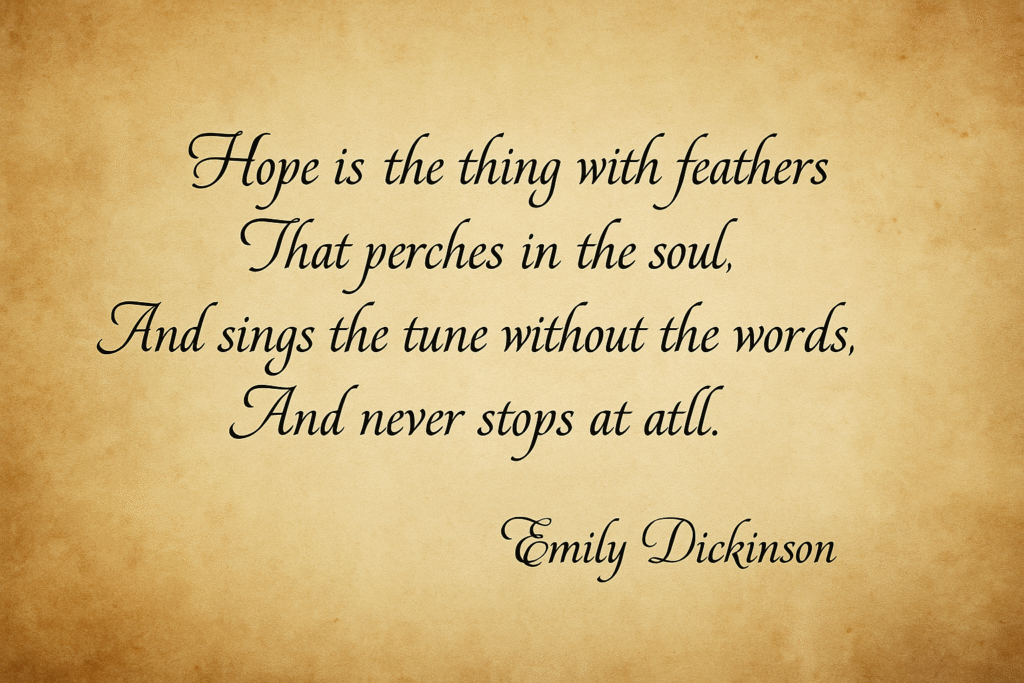
Hope is the thing with feathers
That perches in the soul,
And sings the tune without the words,
And never stops at all.
This short poem defines hope in the most beautiful metaphor possible.
2. Robert Frost – “Fire and Ice”
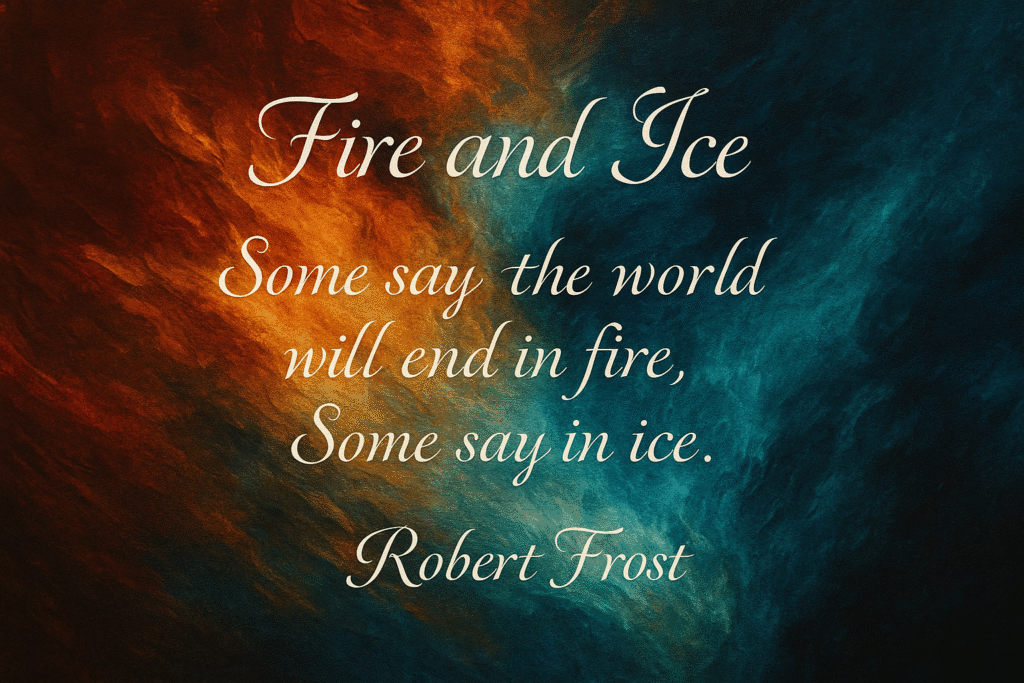
Some say the world will end in fire,
Some say in ice.
A masterpiece of brevity and wisdom, exploring human passion and destruction.
3. Langston Hughes – “Dreams”
Hold fast to dreams
For if dreams die
Life is a broken-winged bird
That cannot fly.
A timeless call to never give up on your dreams.
4. William Blake – “Eternity”
He who binds to himself a joy
Does the winged life destroy.
Blake warns that clinging too tightly to happiness destroys its essence.
5. Matsuo Bashō – Haiku
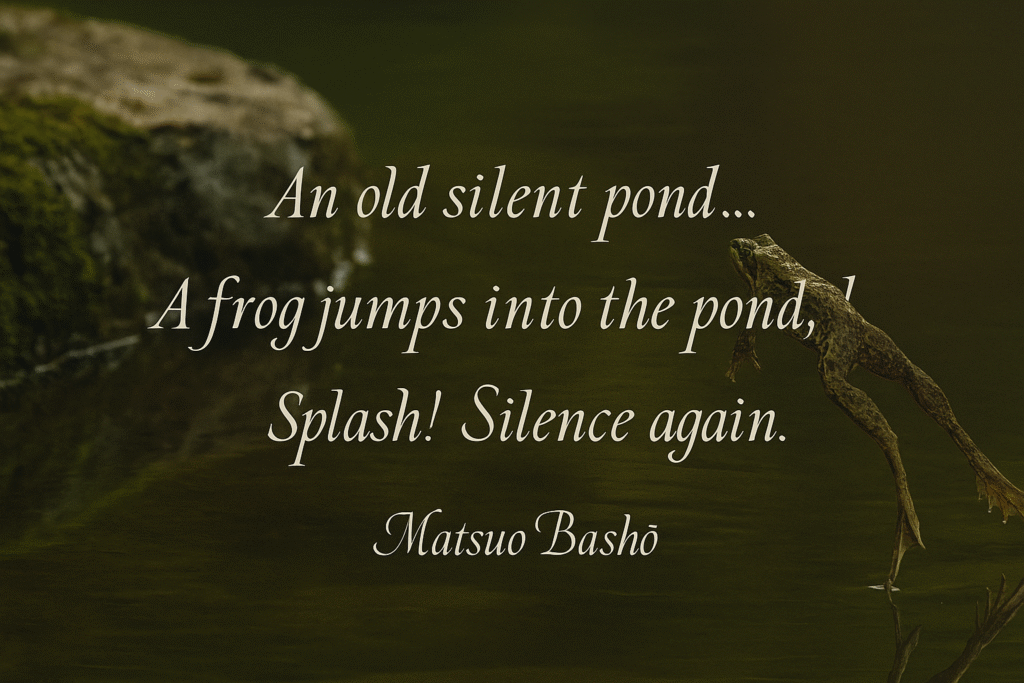
An old silent pond…
A frog jumps into the pond,
Splash! Silence again.
This famous haiku captures a serene moment of nature in just three lines.
6. Sara Teasdale – “There Will Come Soft Rains”
There will come soft rains and the smell of the ground,
And swallows circling with their shimmering sound.
A gentle reminder that nature endures beyond human conflict.
7. William Carlos Williams – “The Red Wheelbarrow”
So much depends
Upon
A red wheel
Barrow
Glazed with rain
Water
Beside the white
Chickens.
Everyday simplicity turned into art.
8. Pablo Neruda – “Sonnet XVII” (Excerpt)
I love you without knowing how, or when, or from where…
Neruda’s poetry makes love feel eternal in just a handful of words.
9. Ogden Nash – “The Cow”
The cow is of the bovine ilk;
One end is moo, the other milk.
A witty reminder that humor has its own poetic power.
10. Carl Sandburg – “Fog”
The fog comes
on little cat feet.
A perfect example of visual and rhythmic poetry in six simple words.
11. Walt Whitman – “A Noiseless Patient Spider” (Excerpt)
Till the gossamer thread you fling catch somewhere…
A metaphor for the human soul reaching for connection.
12. E. E. Cummings – “l(a”
l(a
le
af
fa
ll
s)
one
l
iness
An experimental short poem representing loneliness through typography itself.
13. Maya Angelou – “Still I Rise” (Excerpt)
You may shoot me with your words,
You may cut me with your eyes,
But still, like air, I’ll rise.
A few lines that inspire confidence and resilience.
14. Robert Herrick – “Gather Ye Rosebuds”
Gather ye rosebuds while ye may,
Old Time is still a-flying.
A short classic about seizing life before it passes.
15. Rumi – “The Guest House” (Excerpt)
This being human is a guest house.
Every morning a new arrival.
Rumi’s mystical short poems turn human emotions into divine experiences.
16. Haiku by Kobayashi Issa
In the cherry blossom’s shade
There’s no such thing
As a stranger.
A gentle message of peace and connection.
17. Christina Rossetti – “Remember” (Excerpt)
Remember me when I am gone away…
A poignant reflection on memory and love.
18. Thomas Hardy – “The Darkling Thrush” (Excerpt)
An aged thrush, frail, gaunt, and small,
Had chosen thus to fling his soul.
Even in despair, poetry finds hope.
19. Percy Bysshe Shelley – “Ozymandias” (Excerpt)
Look on my works, ye Mighty, and despair!
A reminder of impermanence — even empires fade.
20. Rabindranath Tagore – “Where the Mind is Without Fear” (Excerpt)
Where the mind is without fear and the head is held high…
A call for enlightenment and freedom through short, powerful lines.
21. Emily Brontë – “No Coward Soul is Mine”
No coward soul is mine,
No trembler in the world’s storm-troubled sphere.
A bold statement of faith and inner strength.
22. Sylvia Plath – “Mushrooms” (Excerpt)
We shall by morning
Inherit the earth.
Our foot’s in the door.
Symbolic and hauntingly brief, like much of Plath’s work.
23. John Donne – “Death Be Not Proud” (Excerpt)
Death, be not proud, though some have called thee mighty.
A challenge to mortality in one unforgettable line.
24. A.E. Housman – “To an Athlete Dying Young” (Excerpt)
Smart lad, to slip betimes away
From fields where glory does not stay.
A short, melancholic reflection on fame and death.
25. Dylan Thomas – “Do Not Go Gentle into That Good Night” (Excerpt)
Rage, rage against the dying of the light.
Only a few words, yet an anthem of defiance and love.
26. Kahlil Gibran – “On Love” (Excerpt)
When love beckons to you, follow him,
Though his ways are hard and steep.
Deep truth about love and surrender.
27. Haiku by Yosa Buson
A summer river being crossed
How pleasing
With sandals in my hands!
Nature and peace flow together in this classic short poem.
The Universal Appeal of Short Poems
Short poems cross cultures, languages, and generations. They can express joy, grief, or gratitude in moments when words fail us. Their simplicity makes them perfect for daily reflection, sharing online, or teaching students about the power of language.
In modern life, where time is limited, short poems remind us to pause to feel deeply, to reflect, and to reconnect with meaning.
How to Write a Memorable Short Poem
Writing short poetry takes clarity and imagination. Here are simple tips to craft your own:
- Focus on one idea. Don’t try to tell a whole story.
- Use imagery. Paint a picture with words.
- Be emotional. The best short poems come from honest feelings.
- Keep it musical. Sound and rhythm give life to short lines.
- Edit ruthlessly. Remove every word that doesn’t serve meaning.
Example:
A drop of rain —
Mirrors the whole sky
Before it falls.
Conclusion:
Short poems prove that words don’t need to be many to be mighty. From ancient haikus to modern verses, poets have always used brevity to reveal the biggest truths. These 27 timeless pieces remind us of life’s beauty, pain, and wisdom — all in a handful of words.
If you ever need peace, inspiration, or emotional healing, just read one of these short poems — and you’ll find a whole world in a few lines.
More Details : 777 Trio Names That Will Make Your Group of Three Stand Out
FAQs
1. What is the typical length of a short poem?
Usually under 20 lines, focusing on one strong image or emotion.
2. Who are the most famous short poem writers?
Emily Dickinson, Robert Frost, Matsuo Bashō, Langston Hughes, and Rumi are among the most celebrated.
3. Why are short poems so popular today?
Because they are easy to read, emotionally deep, and fit perfectly into modern life’s fast pace.
4. Can short poems be meaningful like long ones?
Absolutely — many short poems have changed the way people think about life and love.
5. How can I start writing short poems?
Begin with a feeling, describe it vividly, and keep refining your words until only the essence remains.