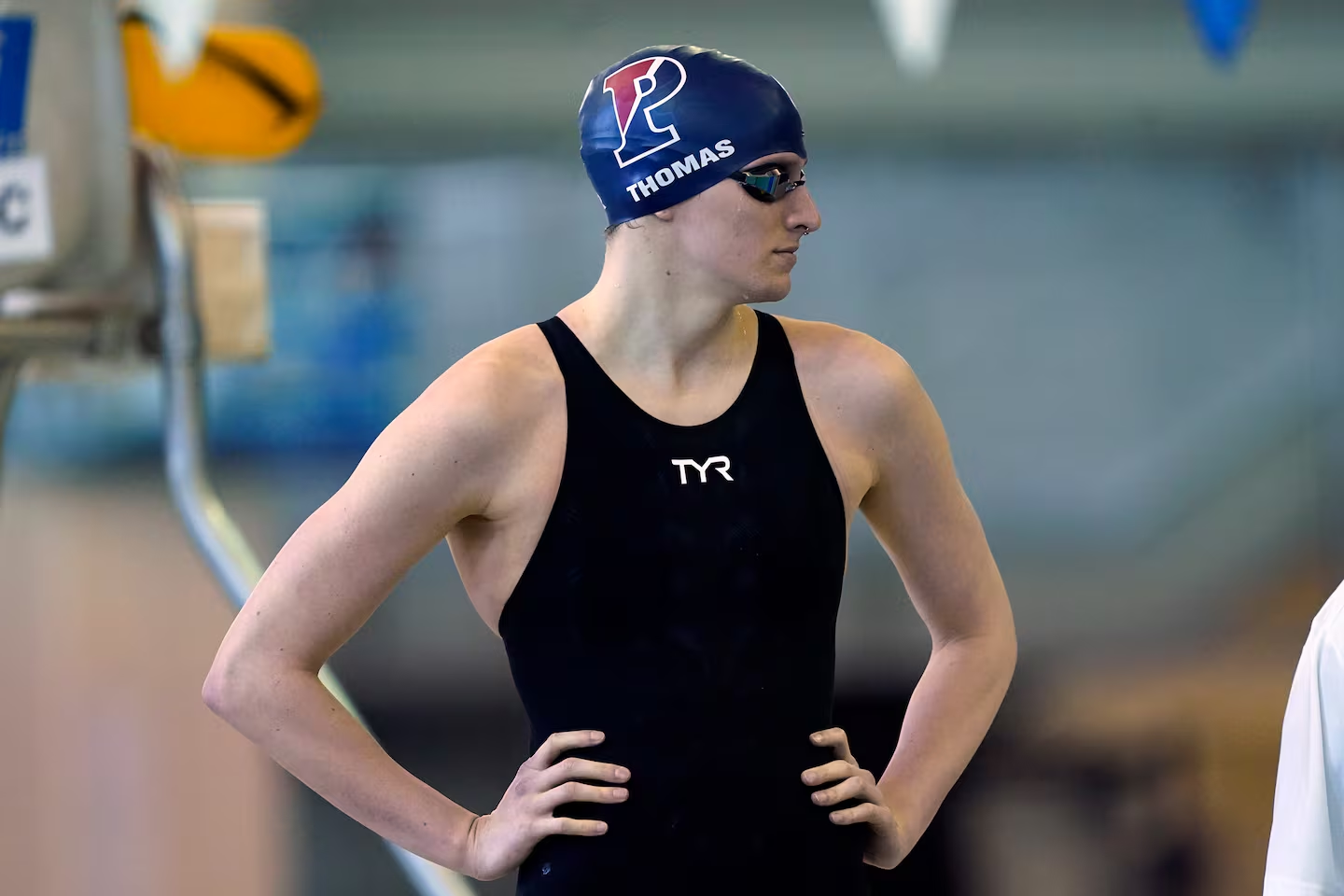
Lia Thomas was born in 1999 in Austin, Texas, where her connection to water began early. From childhood, she showed an unusual focus and determination in swimming. Her discipline, coupled with natural athletic ability, quickly made her one of the standout swimmers in her local community. During her teenage years, Lia competed in various state-level meets and earned recognition as a technically sound and powerful swimmer. By the time she reached college, her skill in freestyle events made her a strong contender on any team.
College Years and Competitive Foundation
When Lia Thomas joined the University of Pennsylvania, she became part of the men’s swimming and diving team. During these initial years, she displayed consistent improvement, posting competitive times in multiple freestyle events ranging from 200 to 1,650 yards. Her training routines, endurance, and race strategies helped her secure top positions in intercollegiate meets. Yet, beneath her athletic achievements, Lia was struggling with something deeply personal — a growing awareness that her gender identity did not align with the way she was living.
The Decision to Transition
After several years of internal conflict, Lia Thomas made the life-changing decision to transition. In 2019, she began hormone replacement therapy and took time to adjust both mentally and physically to the changes that came with it. Transitioning while being a competitive athlete posed unique challenges. It required not only medical supervision but also compliance with official athletic guidelines. Despite these hurdles, Lia Thomas remained committed to swimming — not for fame, but because it was a part of who she was.
Her transition became a turning point, not just in her personal life but in collegiate sports. Lia embodied courage, resilience, and authenticity by living openly as herself.
Return to Competition and New Chapter
After fulfilling all eligibility requirements for transgender athletes set by the National Collegiate Athletic Association (NCAA), Lia Thomas joined the women’s swimming team at the University of Pennsylvania in 2021. Her return to competition drew national attention. Every race she swam was observed, analyzed, and discussed — not only for her results but also for what her participation symbolized in a changing sports landscape.
In 2022, she achieved a milestone by winning the NCAA Division I Women’s 500-yard freestyle championship. That victory made her the first openly transgender woman to win a national collegiate title in the United States. It marked a historic moment — one that sparked celebration, debate, and reflection across the world of sports.
The Broader Debate: Fairness and Inclusion
The rise of Lia Thomas ignited a global discussion on fairness and inclusion in competitive sports. Some celebrated her as a pioneer for transgender representation and equality. They saw her success as a validation of years of advocacy for trans athletes’ right to participate based on gender identity. Others, however, questioned whether the physiological differences resulting from male puberty created an uneven playing field, even after hormone treatment.
The conversation extended far beyond swimming. It became a focal point in universities, sports federations, and media outlets around the world. For the first time, policymakers and scientists were compelled to re-examine how gender identity, biology, and fairness coexist in competitive environments. Lia Thomas’s story transformed into a case study in sports ethics and human rights.
Psychological Strength and Resilience
Behind every headline was a young athlete facing intense public scrutiny. Lia Thomas had to manage pressure not only from competition but also from global attention, criticism, and misinformation. Her ability to remain composed and focused showed exceptional mental strength. She continued to emphasize that her goal was to swim — to do what she loved — and to compete within the rules.
Her resilience offered a new kind of inspiration. For many LGBTQ+ youth and aspiring athletes, Lia became a symbol of courage — someone who proved that authenticity can coexist with ambition. Her story inspired open discussions about mental health, identity, and support for transgender athletes.
Policy Changes and Institutional Reactions
The controversy surrounding Lia Thomas led to major policy reviews across sports organizations. The NCAA adjusted its guidelines for transgender participation, delegating future policy decisions to each sport’s national governing body. Similarly, global institutions like FINA (the international federation for aquatic sports) introduced stricter criteria for transgender women’s participation in elite competitions.
While some saw these changes as necessary steps for fairness, others viewed them as restrictive measures that could limit opportunities for transgender athletes. Regardless of opinion, the undeniable fact is that Lia Thomas pushed sports organizations to address questions that had long been avoided.
Impact on Future Generations
Lia Thomas’s journey is shaping how future athletes will experience sports. Her visibility brought attention to transgender inclusion at all levels — from local swimming clubs to Olympic discussions. Many schools and community organizations have since revisited their inclusivity policies, aiming to find better balance between fairness and representation.
For young athletes discovering their gender identity, her story offers hope. Lia’s courage reminds the world that sports can be a space for everyone, and that authenticity matters as much as achievement.
Life Beyond Competition
Although Lia Thomas’s collegiate swimming career has concluded, her influence extends far beyond the pool. She continues to speak about her experiences, raising awareness about transgender participation, mental health, and equality. Her journey encourages empathy, understanding, and evidence-based policymaking. Lia has become not only a trailblazing athlete but also an advocate for change, highlighting that inclusion and fairness can coexist through dialogue and respect.
The Legacy of Lia Thomas
The legacy of Lia Thomas goes beyond records and titles. It lies in her ability to challenge traditional ideas and open conversations that reshape how we define fairness, gender, and identity in sports. Her name will likely remain a reference point whenever the topic of transgender athletes arises — not because of controversy alone, but because she dared to compete, to live authentically, and to be part of a broader movement for equality.
Her story reminds the world that progress often begins with courage, and that one person’s journey can influence generations to come.
More Details : Tophillsport com: The Ultimate Guide for Sports Fans and Online Gaming Enthusiasts
(FAQs)
1. Who is Lia Thomas?
Lia Thomas is an American swimmer who became the first openly transgender woman to win an NCAA Division I national swimming title.
2. Why is Lia Thomas significant in sports history?
She represents a key moment in the conversation about gender identity, inclusion, and fairness in competitive sports.
3. What challenges did Lia Thomas face?
Beyond the physical challenges of transitioning, she faced intense media scrutiny, public debate, and institutional policy changes affecting her eligibility.
4. How did Lia Thomas impact sports policy?
Her participation prompted governing bodies like the NCAA and FINA to revise and clarify their rules for transgender athletes in competition.
5. What is Lia Thomas doing now?
After completing her college career, Lia continues to advocate for transgender inclusion, share her story, and promote respectful dialogue within the sports community.