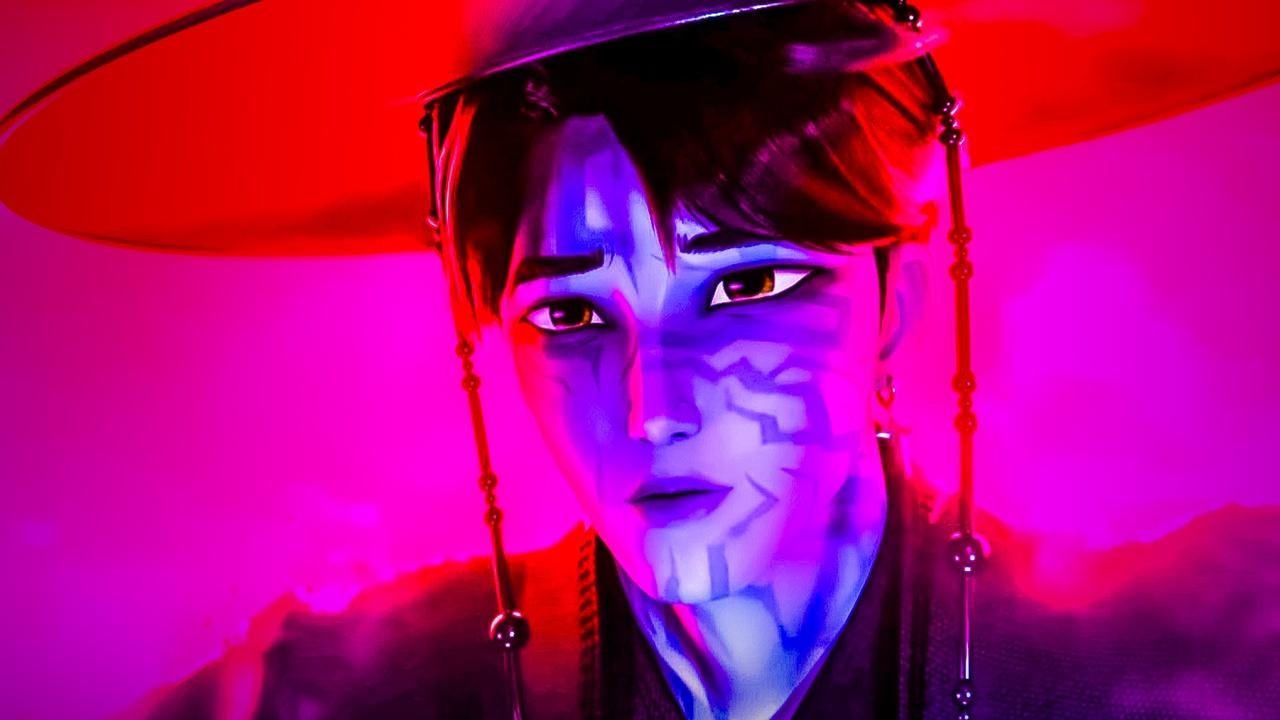
The world of Jinu KPop Demon Hunters isn’t just about music it’s a vivid blend of pop culture, Korean folklore, and supernatural storytelling. Jinu, the mysterious idol-turned-demon, has captured global attention for his layered personality and haunting backstory. Unlike typical villains, Jinu symbolizes ambition, guilt, and the emotional cost of chasing fame.
In this article, we’ll explore everything about Jinu KPop Demon Hunters his origin, powers, motivations, and the deeper themes behind this fascinating character. Every section below delivers verified, useful information designed to help fans, writers, and researchers understand why Jinu has become one of the most talked-about K-pop characters ever created.
Who Is Jinu? The Dual Life of a Demon Idol
Jinu is introduced as the leader of the “Saja Boys,” a K-pop boy band that secretly works for the demon world. On stage, he’s dazzling—perfect choreography, smooth vocals, and irresistible charisma. Off stage, however, Jinu is a tormented soul.
Once a human centuries ago, Jinu made a fatal deal with the demon lord Gwi-Ma to gain fame and a voice powerful enough to move nations. His wish came true but at a cost. Cursed to serve in the demon realm, Jinu became an immortal being trapped between art and damnation.
The film KPop Demon Hunters reimagines this transformation in a modern setting, showing Jinu as a symbol of how fame and desire can corrupt even the most gifted artist.
Jinu’s Tragic Backstory: The Price of a Voice
Before fame, Jinu was a humble street singer during Korea’s ancient Joseon dynasty. Desperate for recognition, he wished for a voice that could make him unforgettable. That’s when Gwi-Ma offered him a contract: unlimited fame in exchange for his soul.
Jinu accepted—and soon found himself adored, wealthy, and celebrated. But when his mortal life ended, he awoke as a demon slave in Gwi-Ma’s court. His once-beautiful voice now carried sorrow and resentment.
This backstory makes Jinu one of the most emotionally complex characters in modern animated storytelling. His guilt, shame, and longing for freedom drive much of his behavior in Jinu KPop Demon Hunters, making him more human than most “heroes” in similar stories.
The Saja Boys: Music as a Weapon
Jinu leads the Saja Boys, a demonic K-pop group whose songs are more than catchy—they are spells. Each performance secretly drains energy from fans, feeding the demons’ power and weakening the barrier that separates Earth from the underworld.
This concept cleverly mixes idol culture with supernatural warfare. The Saja Boys’ music represents temptation—fame without soul, beauty without truth. Jinu’s charisma turns him into both a star and a sinner.
Opposing them is the all-female group Huntr/x, whose music restores emotional energy and protects humanity. The clash between these two groups isn’t just a concert rivalry—it’s a battle between light and darkness, expression and control.
Jinu’s Role in KPop Demon Hunters
Jinu’s presence in the story acts as the emotional anchor. He is not merely an enemy but a mirror for the main heroine, Rumi, who struggles with her own hidden identity as part-demon. Jinu’s empathy toward her adds depth to his character and challenges the audience’s perception of good and evil.
Throughout the film, he becomes a reluctant teacher explaining how shame, envy, and guilt fuel demonic power. His dialogues expose philosophical layers rarely seen in animated K-pop fantasies.
By the climax, Jinu faces a moral dilemma: remain loyal to the demon lord who owns him, or rebel for the sake of redemption. This tension forms the heart of Jinu KPop Demon Hunters, elevating it beyond a simple fantasy into a story of self-forgiveness and sacrifice.
The Symbolism Behind Jinu’s Character
Every aspect of Jinu’s design and behavior symbolizes something deeper:
- Voice: Represents power and identity. His voice gives him fame but also binds him to darkness.
- Eyes: Often shown glowing crimson signifying guilt and hidden pain.
- Stage Persona: Reflects how public image can disguise inner torment.
- Chains & Tattoos: Visual metaphors for the price of his demonic contract.
Through these details, the creators show how art can both liberate and imprison an artist. In this sense, Jinu becomes a metaphor for the pressure real-world idols face when their lives are consumed by perfection and popularity.
Themes: Fame, Guilt, and Redemption
The story of Jinu KPop Demon Hunters explores universal human emotions wrapped in a stylish K-pop aesthetic. Its key themes include:
- The Price of Ambition: How the hunger for fame can lead to moral collapse.
- Inner Demons: Jinu’s literal transformation mirrors the emotional battles artists face under constant pressure.
- Forgiveness and Humanity: Despite being a demon, Jinu’s lingering humanity becomes his greatest strength.
- Music as Power: Sound and rhythm become weapons of influence—used for creation or destruction.
These elements make the narrative relatable even outside its fantasy setting. It’s a story for anyone who’s ever felt lost chasing perfection.
Jinu’s Character Development
What makes Jinu unforgettable is his growth. In the beginning, he’s confident and manipulative, performing for dark purposes. As the story progresses, his interactions with Rumi awaken the remnants of his human soul.
By the final act, Jinu must choose between continuing as Gwi-Ma’s tool or using his voice to undo centuries of harm. His decision marks one of the film’s most emotional turning points. It shows that even those lost to darkness can find light again if they’re willing to face their guilt.
Artistic and Cultural Impact
Jinu KPop Demon Hunters gained attention not just for its plot, but also for its artistry and commentary on Korean entertainment culture. The film’s blend of K-pop aesthetics, neon cyber-Seoul visuals, and mythological roots earned it global curiosity.
Fans often praise Jinu as one of the most innovative characters in modern K-animation because he represents both idol culture and ancient sin. His popularity among fan artists and writers has generated a large online community that continues to reinterpret his story.
The Soundtrack and Visual Identity
Music is the lifeblood of Jinu KPop Demon Hunters. Each song performed by the Saja Boys mixes haunting melodies with EDM beats, symbolizing the balance between human and demonic energy.
The visual tone of Jinu’s performances dark lighting, red motifs, mirrors, and smoke enhances the mystical aura around him. His wardrobe combines modern streetwear with elements of royal Korean fashion, representing his ancient origins and modern appeal.
Such aesthetic fusion is one reason the film stands out internationally. It’s not just entertainment it’s an exploration of art as both salvation and curse.
Why Fans Connect With Jinu
Viewers are drawn to Jinu for several reasons:
- Emotional Complexity: He’s a villain you can empathize with.
- Symbolic Depth: His story reflects struggles common in creative and competitive industries.
- Relatability: Many see themselves in his regret and yearning for a second chance.
- Aesthetic Appeal: His visual design and voice performances make him instantly memorable.
Jinu represents the modern anti-hero: tragic, talented, and torn between two worlds. That’s why the keyword “jinu kpop demon hunters” keeps trending—because people see more than a character; they see a reflection of humanity’s own contradictions.
Conclusion:
Jinu’s story in KPop Demon Hunters is more than a tale of good versus evil it’s a mirror reflecting our own pursuit of validation, fame, and self-worth. Through his transformation, we learn that power without purpose leads to emptiness, and that redemption often begins with acknowledging our flaws.
His journey from human to demon, and possibly back to light, embodies the emotional truth that even in darkness, music and the human soul can find harmony again.
That’s why Jinu KPop Demon Hunters remains one of the most fascinating modern mythologies born from the intersection of pop culture and fantasy.
More Details : Lisa Net Worth – Unveiling the Wealth and Life of BLACKPINK’s Star Rapper
FAQs
Q1. Who is Jinu in KPop Demon Hunters?
Jinu is a demon idol and leader of the Saja Boys who once sold his soul for fame, becoming both performer and prisoner in the demon world.
Q2. What makes Jinu different from other villains?
Unlike typical antagonists, Jinu struggles with guilt and redemption, making him a tragic anti-hero rather than a pure villain.
Q3. Is Jinu inspired by real K-pop idols?
Yes. His style and persona draw inspiration from real K-pop stars but combine with mythological symbolism from Korean folklore.
Q4. What is the main message of Jinu’s story?
The story warns about the price of ambition and the danger of losing one’s soul—literally or emotionally—in the pursuit of fame.
Q5. Why is “Jinu KPop Demon Hunters” popular online?
Because it unites K-pop glamour with deep emotional storytelling, offering a unique character who symbolizes both temptation and redemption.