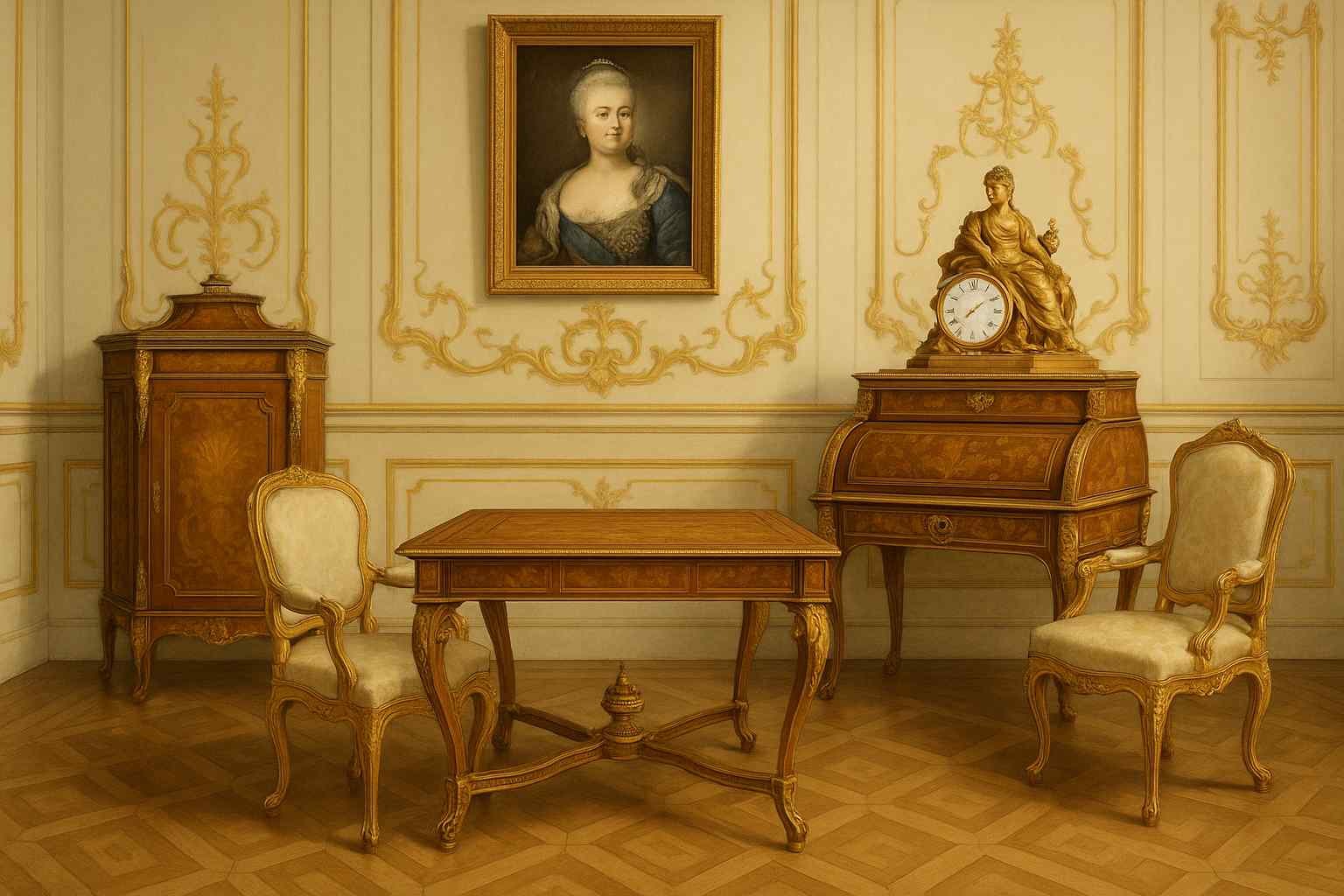
Catherine II of Russia, widely known as Catherine the Great, transformed the Russian Empire not only through political reforms but also by shaping its artistic identity. Among her many passions, her fascination with art, architecture, and interior design left a lasting mark on European decorative culture. Today, historians and collectors remain captivated by Catherine the Great’s furniture, a body of work that reflects the grandeur, innovation, and aesthetic transformation of 18th-century Russia.
A New Era of Russian Decorative Arts
When Catherine ascended the throne in 1762, Russia was eager to establish itself as a refined European power. Catherine embraced Western influences, particularly French Neoclassicism, and rapidly implemented artistic reforms. She invited foreign architects, cabinetmakers, and artisans to Russia, helping shape a new visual language within imperial residences.
It was during this era that Catherine the Great’s furniture began to evolve into a unique blend of Russian craftsmanship and Western sophistication. Her commissions symbolized more than luxury—each piece represented the empire’s desire to participate in the cultural dialogue of Europe.
French Influence: The Foundation of an Imperial Style
French artisans played a crucial role in shaping Russian court aesthetics during Catherine’s reign. Cabinetmakers from Paris brought with them the techniques of the Louis XV and Louis XVI periods, characterized by symmetry, restrained ornamentation, and elegant proportions.
These imported styles became the foundation for Catherine the Great’s furniture, which often showcased:
- Delicate marquetry
- Gilt bronze mounts (ormolu)
- Classical motifs such as laurel wreaths and acanthus leaves
- Luxurious veneers including rosewood, mahogany, and tulipwood
Catherine’s taste leaned toward refinement rather than excess, and this preference guided the commissions she made for her palaces. While Russian furniture had previously been more functional and locally styled, her vision introduced a cosmopolitan sophistication.
The Role of Russian Craftsmanship
Although foreign artisans played an essential role, Russian workshops quickly mastered and adapted European techniques. St. Petersburg became the center of imperial production, housing skilled cabinetmakers who produced custom pieces for the monarchy.
Russian furniture makers added unique elements such as:
- Locally sourced birch and Karelian birch veneers
- Bold geometric patterns
- Distinctive lacquer work influenced by East-Asian imports
At this point, Catherine the Great’s furniture became synonymous with innovation. Russian artisans excelled at merging imported aesthetics with their own cultural identity, resulting in masterpieces that reflected both European elegance and Russian craftsmanship.
Iconic Furniture Pieces from Catherine’s Palaces
Catherine commissioned furniture for numerous imperial residences, including the Winter Palace, Tsarskoye Selo, and Peterhof. Many of these items survive today in museums throughout Russia and Europe.
1. The Hermitage Cabinet Furniture
The Hermitage Museum began as Catherine’s personal retreat for art collecting. Rooms within the palace were outfitted with luxurious cabinets, tables, and chairs. Many pieces included elaborate gilt mounts, rich wood veneers, and intricate inlays depicting landscapes, floral motifs, and classical figures.
2. The Arabesque Rooms
Neoclassical arabesque decoration became a defining feature of Catherine’s palace interiors. Furniture in these rooms often showcased painted panels, mythological scenes, and pastel color palettes. These designs softened the grandeur of palace rooms and created a more intimate environment for the Empress.
3. The Japanese and Chinese Rooms
Catherine collected East Asian art extensively. Furniture in these rooms featured lacquered surfaces, gold detailing, and Oriental motifs, demonstrating her interest in global craftsmanship.
Each piece served a purpose beyond ornamentation. They projected Catherine’s identity as a cultivated ruler with global tastes—an essential message for court guests and foreign diplomats.
Symbolism and Political Messaging Through Design
Catherine understood that interiors were a political tool. The furniture within her palaces communicated themes such as:
- Authority – through classicism inspired by ancient Rome
- Enlightenment ideals – reflected in harmonious proportions and rational design
- Cultural power – shown through the commissioning of the finest artisans in Europe
Thus, Catherine the Great’s furniture can be seen not merely as decoration but as a visual narrative of imperial ambition and enlightened governance.
Materials and Techniques That Defined Her Collection
Exquisite Woods
Furniture from this era frequently included rare wood varieties:
- Mahogany
- Satinwood
- Rosewood
- Birch and Karelian birch
The use of these materials signified luxury and durability.
Ormolu (Gilt Bronze)
Elaborate bronze mounts coated in gold leaf added sophistication to tables, desks, and cabinets. These metal accents often took the form of mythological creatures, floral garlands, or classical scrollwork.
Marquetry and Inlay
Marquetry scenes ranged from geometric patterns to realistic floral bouquets. This technique became a signature of imperial furniture and remains highly sought after today.
Lacquer Work
Inspired by East Asia, lacquered surfaces offered a dramatic contrast to European woods and created visually stunning, glossy finishes.
Preservation and Modern Appreciation
Today, museum curators and conservation specialists dedicate tremendous effort to preserving Catherine the Great’s furniture. Temperature-controlled environments, gentle cleaning techniques, and expert restoration ensure the longevity of these pieces. Many are displayed in the State Hermitage Museum, allowing visitors to witness the craftsmanship firsthand.
Collectors and historians view this furniture not just as decorative art but as a historical archive. Each piece offers insight into:
- 18th-century aristocratic lifestyles
- Emerging Russian identity
- Artistic adaptation and cultural exchange
The antique market continues to value furniture from Catherine’s era, particularly items with documented provenance from her palaces.
Why Catherine the Great’s Furniture Still Matters Today
The significance of her furniture extends far beyond aesthetics. It represents:
- The fusion of cultures—French artistry with Russian innovation
- The political vision of an empress shaping her empire
- The evolution of one of the greatest decorative arts periods in European history
For interior designers, historians, and collectors, Catherine the Great’s furniture remains a benchmark of elegance, craftsmanship, and cultural prestige.
Conclusion
Catherine II’s reign marked a transformative chapter in Russian decorative arts. Her dedication to aesthetic excellence and her passion for European culture resulted in a collection of furniture that continues to inspire admiration centuries later. Crafted with luxury materials, innovative techniques, and masterful artistry, Catherine the Great’s furniture stands as a lasting testament to her influence on both Russian and European history.
By understanding the origins, symbolism, and craftsmanship behind these imperial masterpieces, one gains a deeper appreciation for the cultural legacy of one of history’s most influential rulers.
More Details : How Long Can I Live with Pavatalgia – Understanding Long-Term Life With Chronic Pain
Frequently Asked Questions
1. What makes Catherine the Great’s furniture unique?
Its blend of French Neoclassicism with Russian craftsmanship makes her furniture unlike any other European royal collection.
2. Where can I see Catherine the Great’s furniture today?
Many pieces are preserved in the State Hermitage Museum, the Catherine Palace, and other historic Russian residences.
3. What materials were commonly used in her furniture?
Mahogany, birch, rosewood, gilt bronze (ormolu), marquetry veneers, and lacquer finishes were widely used.
4. Did Catherine design any furniture herself?
While she didn’t build furniture, she personally commissioned pieces and directed aesthetic choices for her palaces.
5. How valuable is furniture from Catherine’s era?
Authentic imperial pieces are extremely rare and can reach high values at international auctions due to their historical significance.