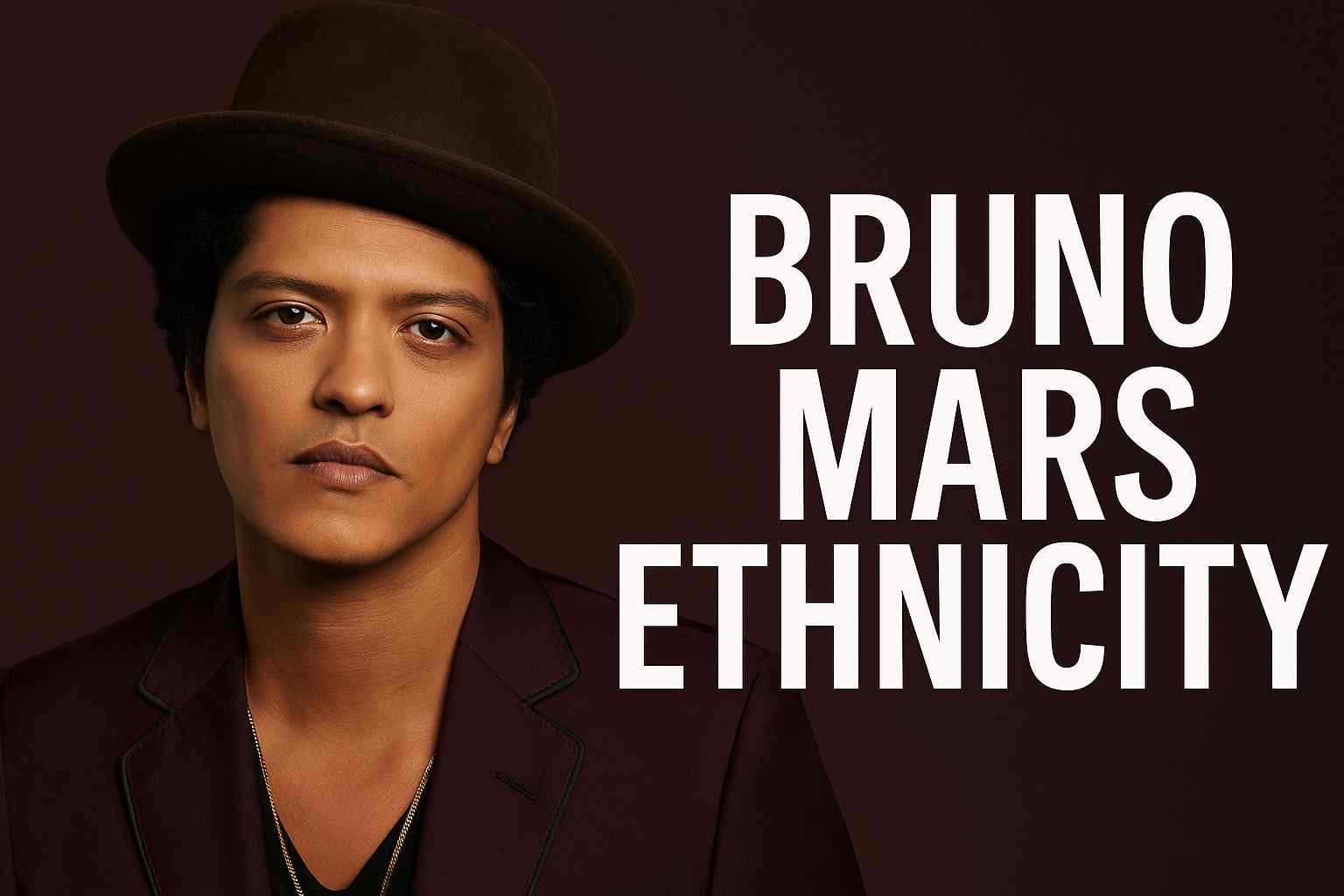
Bruno Mars, one of the most charismatic performers in modern music, is more than just a singer and songwriter he’s a symbol of cultural diversity. Known for his incredible voice, energetic performances, and timeless hits like Uptown Funk, Grenade, and 24K Magic, Bruno’s global appeal is undeniable. Yet, one topic that often intrigues fans is Bruno Mars ethnicity. His mixed background plays a huge role in shaping both his personality and his artistic expression. In this article, we’ll explore the fascinating blend of cultures that define who Bruno Mars truly is.
Early Life and Family Background
Bruno Mars was born as Peter Gene Hernandez on October 8, 1985, in Honolulu, Hawaii. He grew up surrounded by music, rhythm, and art. His parents were entertainers, which meant that creativity was part of his everyday life. From a very young age, he performed in family shows, singing Elvis Presley songs and learning to play multiple instruments.
The story of Bruno Mars ethnicity begins with his parents’ multicultural union. His father, Peter Hernandez, has Puerto Rican and Jewish roots, while his mother, Bernadette San Pedro Bayot, was of Filipino and Spanish descent. Growing up in Hawaii, one of the most ethnically diverse places on earth, Bruno was exposed to a beautiful mixture of traditions, sounds, and cultures that would later shape his music career.
Father’s Heritage: Puerto Rican and Jewish Roots
On his father’s side, Bruno Mars’s ethnicity includes Puerto Rican and Ashkenazi Jewish heritage. His father was born in Brooklyn, New York, into a family with strong Latin and Jewish influences. The Puerto Rican side of his family brought in Latin rhythms, salsa beats, and the joyful essence of Caribbean music all of which can be heard subtly in Bruno’s songs.
The Jewish heritage, meanwhile, added another dimension a legacy of strength, artistry, and resilience. This combination of backgrounds gave Bruno an appreciation for musical diversity, allowing him to blend genres seamlessly. His father was also a talented percussionist, which helped cultivate Bruno’s deep understanding of rhythm and live performance.
Mother’s Heritage: Filipino and Spanish Lineage
From his mother’s side, Bruno Mars ethnicity expands even further. His mother was a proud Filipina with Spanish ancestry. She moved from the Philippines to Hawaii to pursue a better life and eventually met Bruno’s father through music.
The Filipino culture is known for its deep love of singing and performing karaoke, dancing, and strong family ties are central elements. Bruno inherited his soulful voice and passion for performing from this heritage. The Spanish influence brought an appreciation for melody and emotion, visible in his heartfelt ballads like When I Was Your Man. These combined roots gave Bruno an ability to connect emotionally with audiences around the world, regardless of language or background.
The Multicultural Environment of Hawaii
Hawaii is one of the most culturally diverse regions in the world, blending Asian, Pacific Islander, and Western influences. Growing up there, Bruno Mars was constantly surrounded by people from all backgrounds. This environment nurtured his comfort with diversity and helped shape his global perspective.
When discussing Bruno Mars ethnicity, it’s important to note that Hawaii played a key role in defining his identity. He was never confined to one culture. Instead, he embraced many a trait reflected in his inclusive musical style that mixes pop, funk, reggae, R&B, and soul. His Hawaiian upbringing made him a global citizen from birth.
How His Ethnicity Influences His Music
Bruno Mars’s music is a celebration of cultural fusion. Every beat, lyric, and melody echoes his mixed heritage.
- Latin rhythms from his Puerto Rican roots add spice and energy.
- Filipino influences bring emotional depth and passion.
- Western and soul elements reflect the broader American music scene he grew up around.
Songs like Treasure and Versace on the Floor showcase a rich blend of old-school funk and modern pop, symbolizing how Bruno bridges cultures through sound. His identity allows him to move effortlessly between genres, appealing to fans across continents.
Embracing Diversity and Breaking Barriers
Bruno Mars’s success story is also one of representation. In an industry that often struggles with diversity, his rise proves that talent and authenticity matter more than fitting a specific category. Because of his multicultural roots, Bruno has become a relatable figure for millions of people with mixed backgrounds.
The discussion around Bruno Mars ethnicity also highlights how modern entertainers can transcend race and nationality. He never presents himself as just one thing Latino, Asian, or American but rather as a reflection of all. His artistry thrives on the idea that identity is not confined by borders or labels.
Public Perception and Misunderstandings
Many fans and critics have tried to define Bruno Mars’s ethnicity in simple terms, but his heritage defies simplicity. Some assume he is Latino, while others see him as Asian or Pacific Islander. The truth is, he represents all of these influences and more. Bruno himself has spoken about how record labels initially struggled to categorize him unsure whether to market him to Latin audiences, R&B fans, or mainstream pop listeners.
Rather than seeing this as a limitation, Bruno Mars turned it into a strength. His universal appeal stems from being everyone and no one at once a blend of many worlds. This ambiguity allows fans of every background to see a part of themselves in him.
Ethnicity and Global Recognition
When examining Bruno Mars ethnicity, one must also recognize how it has contributed to his global reach. Because he embodies such a mix of cultures, people around the world feel connected to him. In the Philippines, he’s celebrated as a source of pride for having Filipino roots. In Latin America, he’s embraced for his Puerto Rican blood and rhythmic style. Meanwhile, in the U.S. and Europe, he’s admired as a diverse and boundary-breaking pop icon.
This universal connection explains why his concerts sell out worldwide and why his music resonates across generations. Bruno’s ethnic background isn’t just a fact it’s part of his magic, part of what makes him instantly relatable.
A Role Model for the Multicultural Generation
In today’s world, where more people identify with multiple cultures, Bruno Mars stands as a role model for the new generation. His story shows that mixed heritage is something to celebrate, not hide. He embraces every part of his identity and turns it into art. For young people growing up with diverse roots, he represents confidence, pride, and unity.
Through his journey, Bruno teaches us that ethnicity is not a limitation — it’s a source of strength. His music reminds us that cultural blending creates beauty, just as his life demonstrates that harmony is possible when we accept and celebrate differences.
Conclusion
To summarize, Bruno Mars ethnicity is a perfect example of how cultural diversity shapes greatness. He is of Puerto Rican, Jewish, Filipino, and Spanish descent a mix that reflects the evolving face of global identity. His unique heritage not only influences his sound but also his worldview. Bruno’s success shows that embracing one’s roots, rather than conforming to narrow labels, can lead to extraordinary creativity.
Bruno Mars isn’t just a superstar; he’s a living embodiment of multicultural unity. His ethnicity is more than background information it’s the heartbeat of his artistry and the reason his music touches souls around the world.
More Details : Bruno Mars Net Worth – A Deep Dive Into the Life and Wealth of the Global Superstar
(FAQs)
1. What is Bruno Mars’s full ethnicity?
Bruno Mars has Puerto Rican, Ashkenazi Jewish, Filipino, and Spanish ancestry, making him one of the most ethnically diverse stars in pop music.
2. Does Bruno Mars identify with a specific culture?
He embraces all parts of his background and considers himself a proud representative of diversity rather than one single ethnicity.
3. How did his ethnicity influence his music style?
His multicultural roots exposed him to various musical traditions — Latin, soul, pop, funk, and R&B — helping him create his unique, global sound.
4. Why did Bruno Mars change his name from Hernandez to Mars?
He adopted “Mars” as a stage name to stand out in the industry, not to hide his ethnicity, but to create a memorable artistic identity.
5. What can we learn from Bruno Mars’s multicultural background?
His story teaches that diversity is power. By embracing every part of who you are, you can connect with people from all walks of life — just as Bruno Mars does through his music.