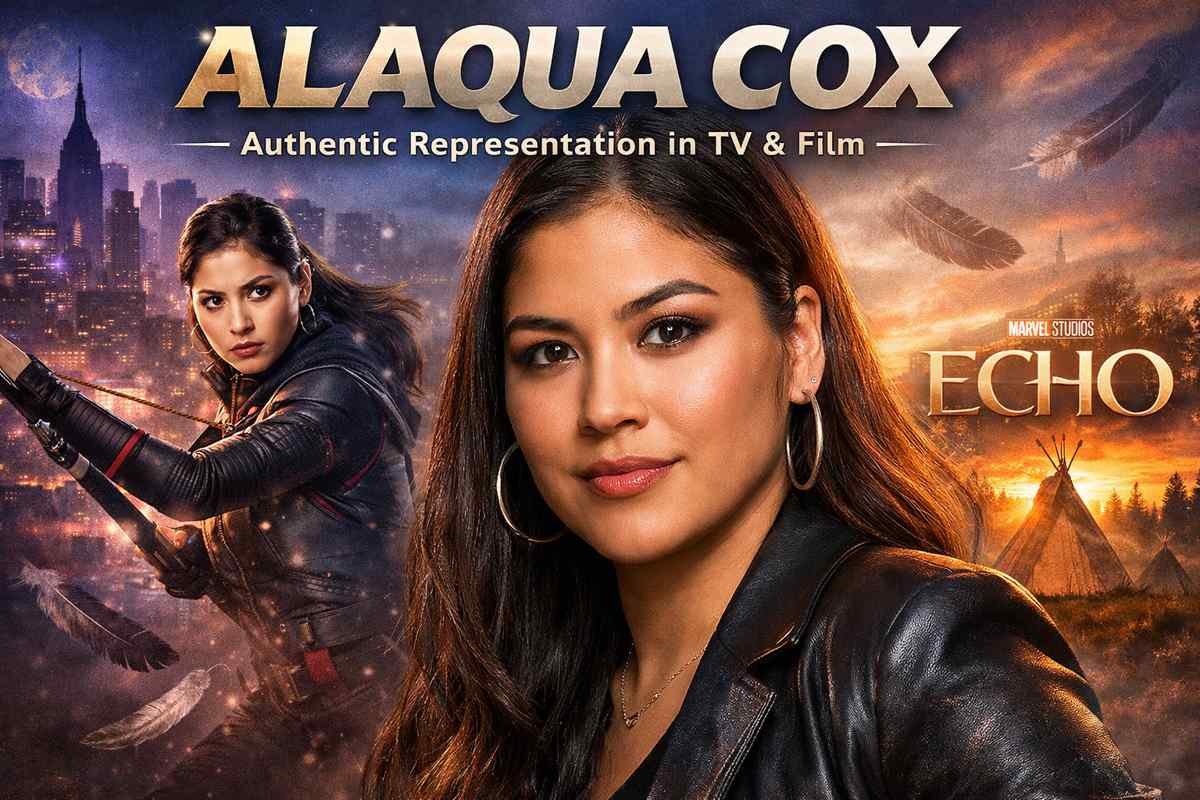
Alaqua Cox has emerged as one of the most meaningful breakthroughs in contemporary entertainment. Her presence in mainstream television represents more than personal success; it signals a broader cultural shift toward authenticity, inclusivity, and accurate storytelling. This article explores her journey, professional impact, and long-term significance within the global entertainment industry.
Early Life and Community Roots
Alaqua Cox was born in 1997 and raised on the Menominee Indian Reservation in Wisconsin. She belongs to both the Menominee and Mohican nations, communities with deep historical and cultural traditions. Growing up in a close-knit environment grounded her identity and shaped her understanding of heritage, family, and responsibility—elements that later influenced her work as a performer.
Deaf Identity and Personal Development
Being Deaf from birth played a central role in her development. American Sign Language became her primary language, enabling her to communicate with clarity and confidence. Rather than limiting her, Deaf culture strengthened her expressive abilities, emotional awareness, and nonverbal communication skills—qualities that translate powerfully on screen.
Pathway Into the Entertainment Industry
Unlike traditional actors who often pursue formal training or years of auditions, Alaqua Cox entered the industry through an open casting search. Producers were specifically seeking authenticity rather than conventional experience. This unconventional entry highlighted a growing industry awareness that real-life experiences can bring unmatched depth to fictional storytelling.
Breakthrough Role in Hawkeye
Her professional debut came with the Disney+ series Hawkeye, produced by Marvel Studios. She portrayed Maya Lopez, also known as Echo, a complex character defined by intelligence, resilience, and moral ambiguity. The performance instantly resonated with audiences and critics for its grounded realism.
Acting Style and Screen Presence
Alaqua Cox demonstrated that compelling performances do not rely solely on spoken dialogue. Her use of facial expressions, controlled body movement, and sign language created an emotionally rich portrayal. This approach expanded conventional ideas of acting and proved that silence, when used skillfully, can be just as impactful as words.
Advancing Deaf Representation
Historically, Deaf characters were often played by hearing actors, resulting in limited authenticity. Her casting challenged that norm by proving that Deaf performers can lead high-profile projects without compromise. This shift encouraged studios to reconsider long-standing casting practices and invest in inclusive storytelling.
Indigenous Visibility in Mainstream Media
Beyond Deaf representation, her Native American identity brought long-overdue visibility to Indigenous communities. Cultural elements in her characters were handled with care and respect, emphasizing accuracy over stereotypes. This approach set a new standard for how Indigenous identities can be portrayed in large-scale productions.
Transition to a Leading Role
Following her successful debut, Alaqua Cox was given the lead role in Echo. This marked a major milestone, as leading a series within a global franchise requires both creative and professional maturity. Her ability to carry an entire narrative confirmed her status as more than a breakout talent.
Narrative Complexity and Character Depth
The Echo series explored themes such as identity, family loyalty, trauma, and self-discovery. Rather than focusing solely on spectacle, the story prioritized emotional realism. Her performance anchored these themes, allowing viewers to connect with the character on a personal level.
Influence on Casting Practices
Her success influenced industry conversations around talent discovery. Casting directors increasingly recognize that widening the talent pool leads to richer storytelling. Alaqua Cox became an example of how inclusive casting decisions can enhance both critical reception and audience engagement.
Audience Reception and Critical Response
Critics praised her naturalistic acting style, noting its emotional restraint and authenticity. Audiences appreciated seeing a protagonist whose identity was integral but not sensationalized. This balanced representation helped normalize diversity in mainstream entertainment.
Avoiding Tokenism Through Craft
One of the most notable aspects of her career is how it avoids tokenism. Rather than being positioned solely as a symbol, her work stands on artistic merit. This approach reinforces the idea that representation is most effective when it is embedded naturally within strong narratives.
Professional Growth and Adaptability
As her visibility increased, so did professional expectations. Alaqua Cox responded by focusing on growth, collaboration, and continuous learning. Her adaptability demonstrates a long-term mindset essential for sustained success in a competitive industry.
Cultural and Social Impact
Her presence has influenced how audiences perceive Deafness and Indigenous identity. By seeing these identities portrayed with nuance and respect, viewers develop greater empathy and understanding. Entertainment thus becomes a vehicle for social awareness without sacrificing quality.
Educational Significance
Educators and advocates often reference her work when discussing inclusion and accessibility. Seeing a Deaf Native American actress in leading roles helps younger generations feel represented and validated, reinforcing the importance of diversity in media.
Future Career Potential
With a proven ability to lead complex projects, Alaqua Cox is well-positioned for a diverse career. Industry observers expect her to explore roles across genres while potentially expanding into creative leadership behind the camera.
Lasting Industry Legacy
Although still early in her career, her impact is already measurable. She has helped redefine success within mainstream entertainment by demonstrating that authenticity strengthens storytelling rather than limiting it.
Conclusion
Alaqua Cox represents a meaningful evolution in film and television. Her journey reflects an industry gradually embracing real representation, cultural accuracy, and inclusive narratives. Rather than being a fleeting moment, her success points toward a more equitable and creative future for global entertainment.
More Details : Blooket Login: A Complete Guide to Access, Customization, Benefits, and Common Fixes
FAQs
Who is Alaqua Cox?
She is a Deaf Native American actress known for her work in major television productions.
Why is her casting considered significant?
It introduced authentic Deaf and Indigenous representation in mainstream franchises.
Did she have prior acting experience?
No, her debut role marked her first professional acting experience.
What makes her performances unique?
Her expressive nonverbal communication and emotional realism set her apart.
What impact has she had on the industry?
She has influenced casting practices and expanded perceptions of inclusive storytelling.