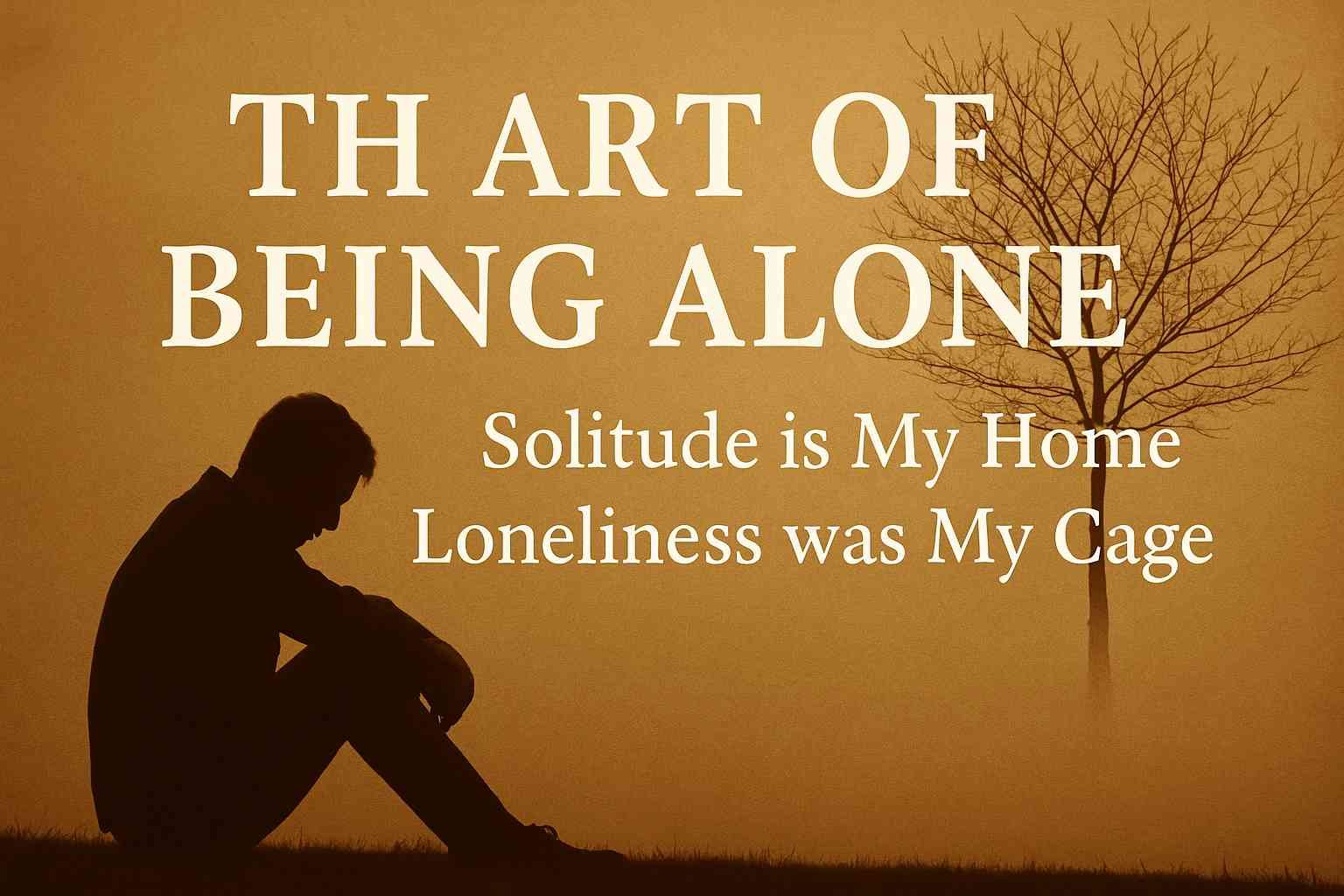
“The Art of Being Alone: Solitude Is My Home, Loneliness Was My Cage” is a powerful and emotionally moving book that explores the transformation from emotional isolation to inner peace. Instead of treating solitude as a weakness, this book teaches readers to embrace it as a source of strength, healing, and profound self-discovery. It beautifully explains how the same experience being alone can feel like either a painful cage or a peaceful home, depending on how we understand it.
This article offers a detailed, insightful, and uplifting analysis of the book’s themes, lessons, and emotional impact.
The Central Theme of the Book
At its core, the book highlights the emotional shift from loneliness to solitude. Though they may look similar from the outside, they feel completely different inside.
- Loneliness is a state of emotional emptiness.
- Solitude is a state of inner fullness.
The author captures this difference with exceptional clarity, helping the reader realize that being alone is not something to fear but something to embrace when understood correctly.
Loneliness as a Cage
In the early chapters, loneliness is described as a mental and emotional cage, where one feels:
- trapped inside their own thoughts,
- disconnected from others,
- unsure of their identity,
- overwhelmed by silence.
The author explains how loneliness often comes from emotional wounds, unmet expectations, or a deep sense of not belonging. This “cage” metaphor reminds readers that the problem is not being alone, but the painful meanings we attach to it.
Solitude as a Home
As the book progresses, the tone shifts from heavy to hopeful. Solitude becomes a home—a peaceful place where the soul can rest.
In solitude, the author finds:
- clarity,
- healing,
- self-discovery,
- creativity,
- emotional independence.
Solitude is not the absence of people; it’s the presence of oneself. The book encourages readers to build a strong, loving relationship with their own mind and heart.
Major Themes That Make the Book Inspiring
1. Self-Discovery
The book emphasizes that true self-discovery happens when we disconnect from external noise. In solitude, the author begins to understand personal desires, fears, values, and dreams. Being alone becomes a mirror reflecting one’s true identity.
2. Healing Through Silence
Silence is portrayed as a powerful healer. Instead of running from emotions, the author sits with them, allowing silence to soothe wounds that words never could.
3. Emotional Independence
One of the strongest messages in the book is that emotional dependence creates disappointment, while emotional independence creates freedom. When you learn to be enough for yourself, the world can no longer control your peace.
4. Transformation and Renewal
The journey from loneliness to solitude is shown as a process of inner renewal. It requires courage, patience, and self-compassion—but the reward is a stronger, wiser, more grounded version of yourself.
Writing Style and Tone
The writing style of the book is gentle, poetic, and deeply reflective. The author writes as if speaking directly to the reader’s heart. Simple words carry profound meanings, and each chapter feels like a quiet conversation between the reader and their inner self.
Life Lessons from the Book
1. Being Alone Is Not a Punishment
The book reframes solitude as a skill—something that must be learned, practiced, and appreciated.
2. Your Worth Is Self-Defined
The author repeatedly reminds readers that their value does not come from others’ approval. Self-worth grows strongest in solitude.
3. Emotional Healing Starts From Within
No one else can truly heal you. Healing begins when you are honest with yourself and allow solitude to guide the process.
4. Solitude Boosts Creativity
When the mind is quiet, creativity flows naturally. The author describes how some of the best ideas come from moments of peaceful isolation.
5. Choose Yourself Daily
Self-love is not a one-time decision—it is a daily act. The book teaches readers to prioritize their emotional health every day.
Why This Book Connects With Modern Readers
Today’s world is loud, fast, and emotionally overwhelming. People are always connected yet still feel empty. This book resonates deeply because it offers a realistic path to emotional peace. It helps readers understand that stepping back from chaos is not selfish—it is necessary for survival and growth.
How the Book Helps in Real Life
✔ Reduces Anxiety
Understanding solitude helps reduce overthinking and emotional stress.
✔ Improves Self-Awareness
Alone time reveals hidden patterns of thought and behavior.
✔ Encourages Better Decisions
With a calm mind comes clarity, and with clarity comes wiser choices.
✔ Builds Stronger Personal Boundaries
Readers learn to say no, protect their energy, and prioritize their inner world.
✔ Creates Emotional Stability
The transformation from loneliness to solitude builds resilience and emotional control.
Who Should Read This Book?
This book is ideal for people who:
- fear being alone
- struggle with emotional pain
- want to build self-love
- feel lost or misunderstood
- want a deeper understanding of their inner world
- seek healing after heartbreak, trauma, or loss
Its lessons are universal and timeless.
Conclusion
“The Art of Being Alone: Solitude Is My Home, Loneliness Was My Cage” is more than a book—it is a guide, a companion, and a gentle reminder that solitude is not something to avoid but something to embrace. The book beautifully shows that the journey from emotional darkness to inner peace begins with accepting and understanding oneself.
Solitude, when approached with love, becomes a sanctuary.
Loneliness may once have been your cage, but solitude can become your home.
More Details : The Ultimate Guide to Building an Effective Remote Work Setup
FAQs
1. Is this book easy to read for beginners?
Yes, the language is simple, emotional, and deeply relatable.
2. Does the book offer practical guidance?
Yes, it provides mindset shifts, emotional insights, and reflective exercises.
3. Can this book help reduce loneliness?
Absolutely. It explains how loneliness can be transformed into peaceful solitude.
4. Is it suitable for young readers or teens?
Yes, it teaches emotional independence and self-awareness in a gentle way.
5. Is this book similar to self-help genres?
Yes, it fits into self-help, emotional healing, and personal growth categories.