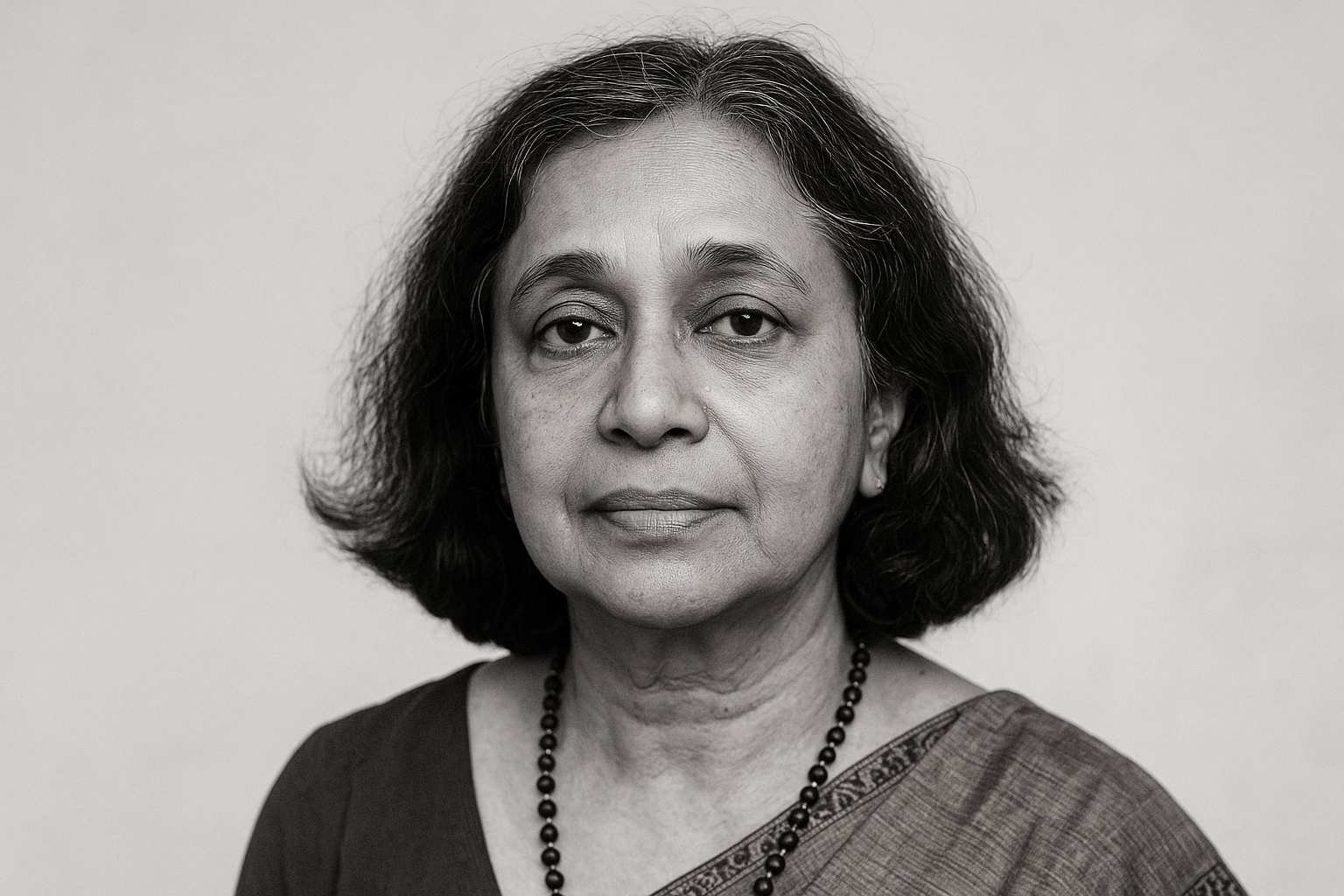
Meena Alexander was one of the most compelling literary voices to emerge from the postcolonial world. A poet, novelist, and academic, she explored the complexities of identity, migration, and displacement. Her life, spread across India, Sudan, England, and the United States, mirrors the themes of fragmentation and belonging that shaped her creative work. Through her writings, Meena Alexander became a bridge between cultures, articulating the immigrant experience with emotional depth and intellectual precision.
Early Life and Education
Born in 1951 in Allahabad, India, Meena Alexander spent much of her childhood in Kerala, where her Malayali roots influenced her linguistic and cultural development. Her father’s work as a meteorologist led the family to Sudan, where she attended Khartoum University. This early exposure to multiple cultures profoundly shaped her sense of self. By the age of eighteen, she had earned a bachelor’s degree in English and Philosophy, demonstrating early brilliance and sensitivity to language.
Afterward, she moved to England to pursue her PhD at the University of Nottingham. Her dissertation on modern poetry reflected her growing interest in the intersections of language, gender, and identity interests that would define her later works. The intellectual foundation she built during these formative years gave her the tools to dissect the emotional and psychological aspects of exile and belonging.
The Making of a Transnational Poet
Meena Alexander’s career is remarkable for its transnational reach. Writing from the vantage point of a woman of color in the diaspora, she articulated what it means to live between worlds. Her poetry often captures the ache of displacement an emotional terrain familiar to many immigrants. Yet, rather than surrendering to nostalgia, she transformed fragmentation into a source of strength.
Her early poetry collections, such as Stone Roots (1980) and House of a Thousand Doors (1988), already displayed the lyrical precision that became her hallmark. In these poems, she fused memory and geography, mapping personal experiences onto historical landscapes. The migrant’s fractured consciousness became a poetic metaphor for the condition of modern existence.
Major Works and Literary Themes
Throughout her career, Meena Alexander wrote across genres poetry, fiction, memoir, and critical essays. Each form allowed her to probe different facets of identity and belonging.
Poetry
Her acclaimed collection Illiterate Heart (2002) won the PEN Open Book Award and established her as a leading figure in contemporary American poetry. The poems navigate the liminal space between continents, languages, and selves. Alexander’s voice is both intimate and political, embodying the struggles of those forced to live in translation.
In Raw Silk (2004), she grappled with global violence and personal loss, responding to the events of 9/11 with a mix of grief and defiance. Her later work, Atmospheric Embroidery (2015), returned to themes of memory, love, and resilience, confirming her enduring relevance in an age of displacement.
Fiction
Her novels, including Nampally Road (1991) and Manhattan Music (1997), explore similar concerns through narrative form. These stories often center on female protagonists negotiating the boundaries of culture and desire. Nampally Road is set in Hyderabad and reflects on political unrest and gender oppression, while Manhattan Music examines the lives of South Asian immigrants in New York City. Both novels are remarkable for their poetic language and psychological insight.
Memoir and Essays
In her memoir Fault Lines (1993; revised 2003), Meena Alexander reflects on her own fragmented identity. The text moves fluidly across continents and memories, mirroring the discontinuities of exile. Through self-exploration, she illuminates the broader condition of migrant existence.
Her critical essays collected in works such as Poetics of Dislocation (2009) offer profound reflections on the role of art in times of trauma. She argued that poetry has the power to restore a sense of belonging, even in a world marked by violence and loss.
Themes of Exile and Identity
The dominant motif in Meena Alexander’s writing is exile—not only as a physical condition but as a state of mind. Her characters and poetic personas often exist between languages and homes, searching for coherence in multiplicity. This sense of “in-betweenness” defines the modern diasporic experience.
Language and Memory
For Alexander, language was both a gift and a burden. English—her literary medium—was inherited from colonial history, yet she reshaped it to express her hybrid identity. Her poems are filled with the rhythms of Malayalam, Arabic, and Hindi, layered beneath the English surface. This linguistic richness underscores her belief that memory and language are inseparable from personal identity.
Gender and the Body
As a feminist poet, she also examined the female body as a site of both oppression and resistance. Her writing challenges patriarchal and colonial narratives by reclaiming bodily experience as a form of knowledge. Whether writing about love, motherhood, or violence, she infused her work with a deeply embodied understanding of selfhood.
Home and Belonging
Perhaps the most poignant aspect of her oeuvre is her search for “home.” In one of her essays, she described herself as “a woman cracked by multiple migrations.” Yet within that fracture, she discovered beauty. For her, home was not a fixed place but a shifting constellation of memories and emotions—a space that could exist in poetry itself.
Academic Career and Influence
Beyond her literary achievements, Meena Alexander was an influential academic. She taught at universities around the world, including the City University of New York, Columbia University, and the University of Hyderabad. Her lectures and writings on postcolonial theory, gender studies, and creative writing inspired generations of students.
She was a strong advocate for marginalized voices in literature, often highlighting the works of women and writers of color. Her presence in academia challenged traditional Western literary canons and opened new pathways for transnational feminist discourse. By merging scholarship and creativity, she redefined what it meant to be both a poet and a professor.
Global Recognition and Legacy
Meena Alexander’s contributions earned her international recognition. She received numerous fellowships and awards, including those from the Guggenheim Foundation, Fulbright Program, and Rockefeller Foundation. Yet her true legacy lies in how her work continues to resonate with readers navigating the complexities of identity in a globalized world.
Her poetry is taught in universities across continents, from India to the United States. Scholars frequently cite her as one of the most important voices in postcolonial and feminist literature. Her writing continues to inspire conversations about diaspora, gender, and the transformative power of language.
The Enduring Relevance of Meena Alexander
Even after her passing in 2018, Meena Alexander’s words remain vital. In an era marked by migration crises, cultural displacement, and border conflicts, her reflections on exile acquire renewed urgency. She reminds us that identity is not a static label but an evolving narrative shaped by memory and imagination.
Her poetry offers solace to those who live between worlds—immigrants, refugees, and travelers seeking connection. At the same time, her intellectual rigor challenges readers to confront the ethical dimensions of belonging in a divided world. Through her art, she transformed personal dislocation into universal empathy.
Conclusion
Meena Alexander’s life and work stand as a testament to the resilience of the human spirit. Her writings reveal that even in fragmentation, there can be wholeness; even in exile, there can be home. She turned her multilingual, multicultural existence into a rich poetic landscape where memory, body, and voice converge.
By exploring the intersections of identity, gender, and displacement, she expanded the boundaries of world literature. Today, her legacy endures not just in her published works but in the countless readers and writers who continue to find themselves reflected in her words.
More Details : The Life of Mariah Lynn: Music, Family, and More
(FAQs)
1. Who was Meena Alexander?
Meena Alexander was an Indian-American poet, novelist, and scholar known for her works exploring identity, migration, and memory. She was a prominent voice in postcolonial and feminist literature.
2. What are some of her most famous works?
Her notable books include Illiterate Heart, Fault Lines, Nampally Road, and Raw Silk. Each examines themes of exile, love, and belonging.
3. What influenced Meena Alexander’s writing?
Her experiences living across India, Sudan, England, and the United States shaped her sense of dislocation and identity, deeply influencing her poetic vision.
4. What awards did she receive?
She received the PEN Open Book Award, fellowships from the Guggenheim Foundation, and other honors recognizing her literary and academic excellence.
5. Why is Meena Alexander’s work still relevant today?
Her exploration of migration, language, and cultural hybridity speaks powerfully to contemporary global issues, making her work timeless and essential.