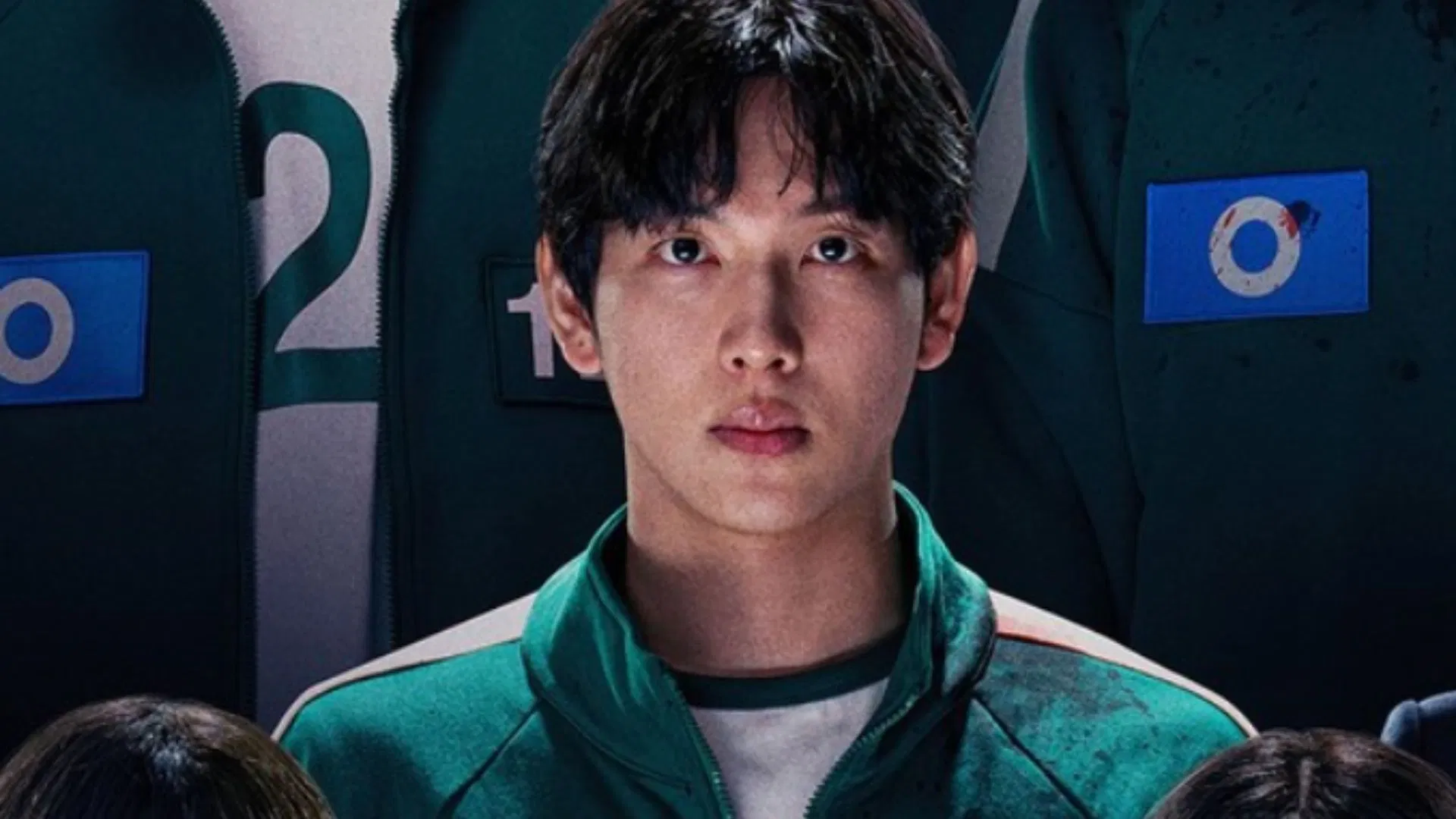
Every season of Squid Game introduces characters who redefine the meaning of survival but none have shaken audiences quite like player 333. His presence is mysterious, his motives complex, and his journey tragic. Within the chaos of death games and moral collapse, player 333 emerges not as a villain or hero, but as a chilling reminder of how far a person can fall when pushed to the edge of desperation.
The Origins of Player 333
Before the mask, before the number, there was a man once respected, ambitious, and full of promise. Player 333 was a financial analyst and online influencer who gained fame for his bold investment advice and motivational videos. But when one of his crypto ventures crashed, thousands of his followers lost their savings and so did he.
Debt, lawsuits, and guilt consumed him. Unable to face the ruin he caused, he vanished from public life. Months later, his name appeared again not on a financial channel, but on the participant list of the most dangerous game ever created: the Squid Game.
His story began as a man seeking redemption, but it soon turned into a study of psychological breakdown under unbearable pressure.
The Reason He Joined the Game
Like every contestant, player 333 had debts but his reasons were deeper. He didn’t just want money; he wanted punishment. Haunted by the faces of the people he misled, he entered the game hoping to prove he was more than his mistakes. But what he found inside was far darker.
In the beginning, he helped others, formed alliances, and even showed compassion. However, as rounds passed and bodies fell, player 333 began to change. His moral compass twisted, replaced by cold logic and survival instinct. The same analytical brilliance that once made him rich now turned into a weapon of manipulation.
The Transformation: From Savior to Survivor
There’s a moment in the middle of the series where player 333 looks into the mirror after surviving a brutal round. His hands are trembling, his face pale yet his eyes are calm. It’s the first visual sign of his transformation.
He realizes that in this world, kindness is weakness. The system rewards cruelty disguised as strategy. That’s when he makes a chilling decision: if survival demands the loss of humanity, so be it.
From that point, his behavior shifts. He starts using others as tools, calculating every alliance like a chess move. Even those who trust him become expendable in his path to victory.
His Relationship with Player 222
One of the most emotionally charged dynamics in the series is between player 333 and player 222, a young woman carrying her newborn child inside the game. She once trusted him outside the arena, believing he would protect her. But inside, that trust turns into tragedy.
Initially, player 333 vows to keep her safe a promise rooted in guilt and love. But as the competition grows deadlier, his protective instinct warps into obsession. In the shocking penultimate episode, he betrays player 222 in a desperate attempt to reach the final round.
This act becomes the defining moment of his character arc the moment where redemption dies, and ambition takes over.
The Psychological Breakdown
By the final episodes, player 333 is no longer the man who entered the game. His voice becomes detached, his decisions mechanical, and his conscience erased. Each flashback shows fragments of his former life his success, downfall, and moments with his family reminding viewers that monsters are not born; they are made.
Psychologists analyzing the character note his descent mirrors a condition known as moral desensitization when repeated exposure to violence erases empathy. By the time he reaches the final game, he doesn’t fight for life; he fights to prove he can win. The prize money has become irrelevant survival itself is the addiction.
The Final Game
The final round is a masterclass in psychological warfare. Only three players remain, and player 333 stands at the center. Rain pours, the arena lights flicker, and every sound echoes with dread. He no longer seeks allies or pity only victory.
In a shocking twist, he sacrifices another contestant by exploiting the rules. But karma finds him moments later. Just before the final bell, he slips, falls, and crashes into the glass bridge below a poetic end for a man who built his empire on fragile lies.
As his body lies motionless, the camera zooms in on his player number: 333 three mirrored halves of one soul, shattered beyond repair.
The Symbolism of Player 333
Every number in Squid Game carries meaning, and player 333 is no exception. The repetition of “3” represents cycles birth, life, and death. His story embodies this pattern perfectly: his rise to success, his moral death, and his physical end.
He is not just a character he’s a metaphor for the modern human trapped between morality and ambition. In many ways, player 333 is us driven by dreams, destroyed by greed, and defined by the choices we make when survival is at stake.
How Player 333 Changed the Narrative
Before his arrival, the games were simply about survival. After player 333, they became about identity. His presence forces both the characters and the audience to question: What does it mean to be human in a world where empathy costs your life?
His transformation added depth to the series blurring the lines between good and evil. Even after his death, his legacy continues to shape the tone of the story, reminding viewers that sometimes the greatest villain is not the system it’s the part of ourselves that adapts to it.
The Legacy of Player 333
After the season’s release, player 333 became a global phenomenon. Fans debated whether he was evil or simply broken by the game. Memes, theories, and fan art flooded social media, celebrating his complexity.
For many, he represents the modern anti-hero flawed, intelligent, and terrifyingly human. His story also sparked philosophical discussions about capitalism, guilt, and survival ethics.
Even though he dies, player 333 lives on as one of the most unforgettable characters in modern thriller television a man who lost everything, including himself.
Moral Lessons from Player 333
The tragedy of player 333 carries powerful lessons. His downfall teaches us that intelligence without empathy becomes destruction. Ambition without morality leads to emptiness. And no amount of success can compensate for the loss of humanity.
He reminds us that every decision defines who we become. Whether in a deadly game or the real world, survival without compassion is a hollow victory. Through him, the series exposes the uncomfortable truth: that the game never ends it just changes form.
Conclusion
Player 333 is more than a number he is a symbol of human duality. His journey from hope to horror reflects the thin line between redemption and ruin. The brilliance of his character lies not in what he did, but in why he did it.
Through his story, viewers witness the collapse of conscience under pressure, the corruption of ambition, and the haunting reality of moral decay.
In the end, player 333 doesn’t just die in the game he becomes its eternal echo, reminding us that the worst prison isn’t the arena, but the guilt that lives within.
More Details : Avatar World: The Ultimate Virtual Life Game Redefining Imagination
FAQs
1. Who was Player 333 before joining the game?
He was a former financial analyst and influencer who lost everything in a failed crypto venture, leading him into the Squid Game for redemption.
2. Why did Player 333 join the Squid Game?
He sought both money and self-punishment, hoping to reclaim his dignity — but ended up losing his humanity.
3. What made Player 333 unique among contestants?
His mix of intelligence, emotional control, and strategic cruelty made him one of the most unpredictable and dangerous players.
4. What happened to Player 333 in the end?
He reached the final game but fell to his death after betraying others — symbolizing the fall of pride and greed.
5. What does Player 333 represent?
He represents moral decay in the face of survival — a reflection of how society rewards ambition even when it destroys compassion.