Inbound calls remain one of the most sensitive points in business communication. Sales conversations, support escalations, onboarding calls and verification flows still rely on voice, especially when timing and trust matter. Behind this layer sits a technical foundation that rarely gets attention but continues to do its job reliably: telephone DID numbers.
What Is a Telephone DID Number and How It Works
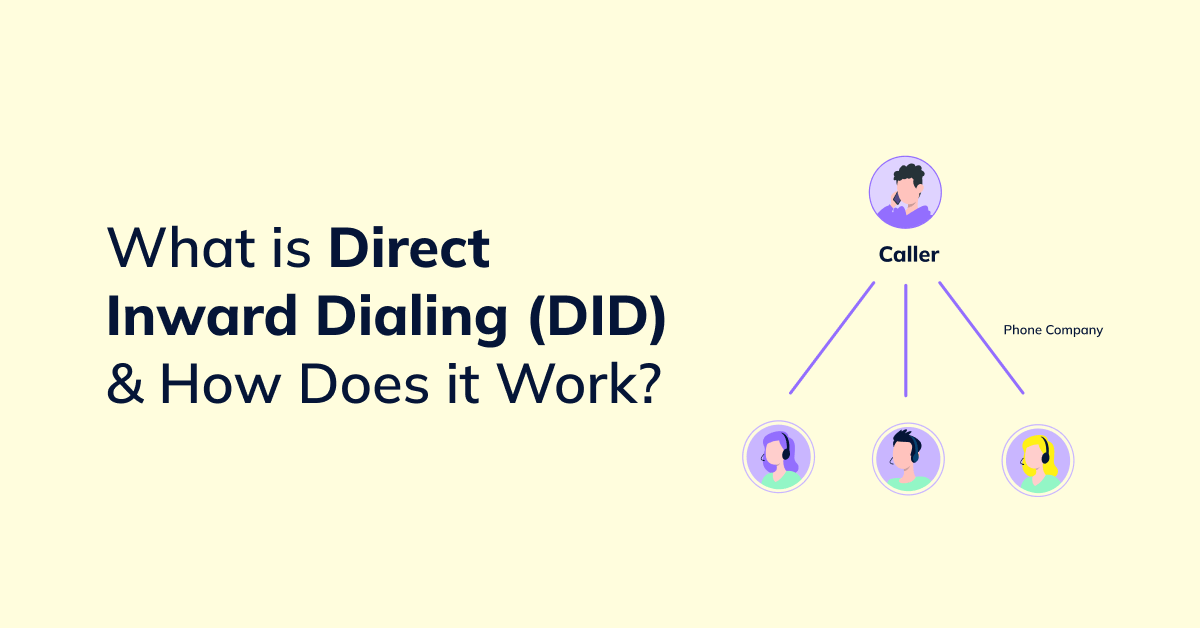
A telephone DID number (Direct Inward Dialing) is a virtual inbound number that routes calls directly to a predefined destination without passing through a shared reception line or physical switchboard.
Each DID acts as an independent entry point into a company’s voice infrastructure. Calls can be delivered to a SIP trunk, cloud PBX, call queue, IVR, CRM-connected softphone or contact centre platform. The number itself is not tied to hardware or a specific device.
In operational terms, a telephone DID Number functions as a routing rule combined with a public-facing number that customers can dial. This separation between number and endpoint is what allows businesses to scale inbound communication without rebuilding infrastructure.
How Telephone DID Numbers Route Incoming Calls
When a call is placed to a DID number, it is recognised by the carrier and forwarded into the provider’s network. From there, routing logic determines where the call should be delivered.
Routing rules are defined by the business and may include:
- Destination endpoints
- Time-based schedules
- Load balancing between teams
- Geographic handling
- Failover and backup scenarios
All routing decisions happen automatically and in real time. From the caller’s perspective, the experience remains identical to dialing a standard local or international phone number.
Direct Inward Dialing Explained for Business Telephony
Direct inward dialing removes the bottleneck of a single main line. Instead of routing every call through a receptionist or shared IVR, each DID can be assigned to a specific department, campaign or individual user.
This approach reduces waiting times, improves first-call resolution and makes growth predictable. New numbers can be activated or reassigned without touching the underlying voice infrastructure. For companies expanding across teams or markets, this flexibility is an operational requirement rather than an added benefit.
Business Use Cases for Telephone DID Numbers
DID numbers are used wherever inbound calls have a direct impact on revenue, compliance or customer experience.
Common scenarios include:
- Sales teams receiving direct calls from ads, landing pages or local listings
- Support departments separating technical, billing and account-related traffic
- Platforms handling user verification and transactional communication
- Marketplaces masking personal numbers between participants
- Distributed teams working across regions and time zones
Because each DID operates independently, call data can be tracked per number. This allows businesses to measure call volume, answer rates and response times without relying on assumptions or manual reporting.
Using DID Numbers for Local and International Call Presence
DID numbers are often used as the foundation for inbound routing in sales, support and verification workflows, especially when call volume needs to be segmented by region or campaign. A detailed breakdown of number availability, routing logic and geographic coverage is available on the telephone DID numbers service page.
This model is widely used by SaaS companies, international service providers and ecommerce platforms entering new markets. It lowers friction for customers while keeping operations centralised and controlled from a single system.
Why Businesses Still Use Telephone DID Numbers Today
Voice communication has not disappeared. It has become more selective. Customers call when they expect clarity, accountability or immediate action. DID numbers support these interactions without adding complexity to backend systems.
Businesses continue to rely on DID numbers because they provide:
- Predictable inbound call delivery
- Control over routing and failover logic
- Compatibility with SIP trunks and cloud PBX platforms
- Clear separation between teams, campaigns and regions
- Scalable growth without hardware dependency
In most cases, DID numbers are deployed as part of a broader VoIP environment that includes SIP connectivity, call routing, failover logic and regional coverage. Providers such as DID Global position DID numbers within this wider infrastructure context, where inbound capacity planning and long-term scalability are treated as operational considerations rather than standalone features.
Are Telephone DID Numbers Still Relevant for Modern VoIP Systems
DID numbers are not a legacy feature kept alive by habit. They remain part of modern telephony because they solve concrete operational problems. As long as businesses need reliable inbound routing, visibility into call performance and the ability to scale without friction, DID numbers will remain relevant.
In voice communication, clarity and control still matter. Telephone DID numbers deliver both.