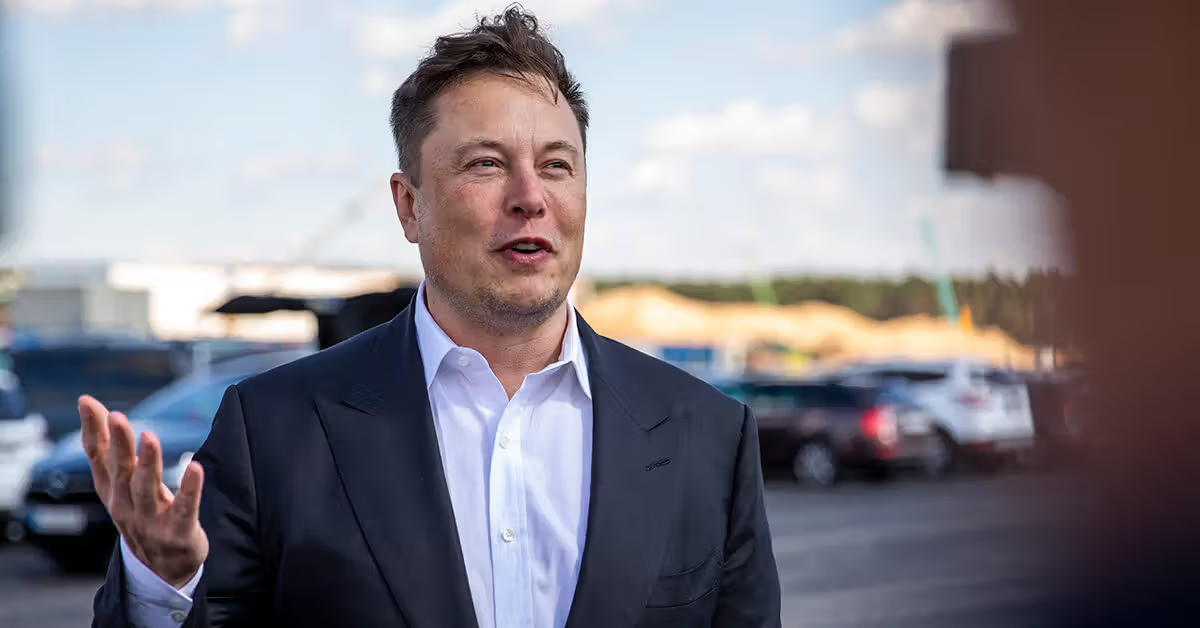
The question “is Elon Musk autistic” has become one of the most searched queries related to the billionaire entrepreneur. When a global figure openly talks about his neurological differences, it naturally attracts public curiosity. Elon Musk, known for leading Tesla, SpaceX, Neuralink, and multiple groundbreaking ventures, has a unique personality that stands out in the corporate world. This article explores Musk’s own statements, the meaning of autism spectrum disorder (ASD), and the broader significance of this topic for society.
Elon Musk’s Public Disclosure
In 2021, during his appearance on Saturday Night Live, Elon Musk revealed that he has Asperger’s syndrome, a condition historically considered part of the autism spectrum. This was the first time he publicly acknowledged it, giving clarity to many who wondered, is Elon Musk autistic? His disclosure highlighted that he communicates and thinks differently—something often noticeable in interviews and public conversations.
Although the term Asperger’s is no longer used in many official diagnoses, it still helps describe a specific profile within ASD. Today, it is recognized under the broader category of autism spectrum disorder.
What Autism Spectrum Disorder Really Means
Autism spectrum disorder (ASD) refers to a neurological difference, not a disease. It influences how individuals perceive the world, interact socially, and process information. Autism exists on a spectrum, meaning no two autistic individuals are exactly alike. Key characteristics may include:
- Unique communication styles
- Strong focus and deep interest in specific topics
- Sensory sensitivities
- Preference for routine and structure
- Analytical and pattern-based thinking
Understanding these traits helps answer the question “is Elon Musk autistic” with a more informed perspective, especially when comparing ASD characteristics to Musk’s personality.
Autistic Traits and Musk’s Personality
Many people observed traits in Musk long before he publicly addressed them. While traits alone cannot define autism, some tendencies he discusses align with ASD characteristics, such as:
1. Exceptional Focus
Musk is known to work for long hours and maintain concentration on complex engineering tasks. This ability to hyperfocus is a trait many autistic individuals share.
2. Direct Communication
His communication often comes across as blunt or highly factual. Musk himself has mentioned that he sometimes struggles to understand subtle social cues.
3. Deep Specialized Interests
From rockets to artificial intelligence, Musk shows intense passion for highly technical subjects—another common ASD trait.
4. Nontraditional Social Behavior
He has described feeling socially different during childhood and young adulthood, a common experience among autistic individuals.
These aspects do not determine autism automatically, but they support his own statement and help explain why the discussion around “is Elon Musk autistic” continues globally.
Why Musk’s Disclosure Matters
When a world-famous entrepreneur openly discusses autism, it impacts millions. Musk’s statement helped normalize conversations around neurodiversity. His achievements prove that autistic individuals can excel in fields like technology, engineering, and scientific innovation.
His disclosure also challenges stereotypes—autism is not a limitation but a different way of thinking. Many autistic minds contribute groundbreaking ideas across diverse industries.
Autism and Innovation: A Powerful Connection
Research suggests that many autistic individuals possess strengths that contribute to innovation, including:
- Exceptional memory
- Logical problem-solving
- Ability to notice details others miss
- Unique, unconventional thinking
- Persistence and determination
When examining “is Elon Musk autistic”, it becomes clear that his innovative mindset may align with traits commonly observed in neurodivergent thinkers. This does not mean autism causes genius, but rather that diverse brains can produce extraordinary ideas.
Impact on Autism Awareness Worldwide
Musk’s openness sparked a larger conversation about inclusivity and understanding. Some positive outcomes include:
- Increased public acceptance of autistic individuals
- Greater attention to neurodiversity in workplaces
- Better understanding of communication differences
- Reduced stigma around being “different”
People often look up to leaders like Musk, so his transparency encourages others to embrace their identities without fear.
Misconceptions to Avoid
While discussing autism, it is important to avoid oversimplifications. Not every autistic person thinks like Musk, nor will everyone excel in science or engineering. Autism varies widely, and each individual has their own talents and challenges.
Some misconceptions include:
- Autism equals genius: False—some autistic individuals excel in specific fields while others shine in everyday life skills.
- Autistic people cannot lead: False—Musk, along with many other successful leaders, proves otherwise.
- All autistic traits are the same: False—ASD is highly individualized.
Understanding this helps maintain a balanced perspective when questioning, is Elon Musk autistic?
How Neurodiversity Benefits the Modern Workplace
Today, companies increasingly recognize the value of neurodivergent employees. Organizations benefit from:
- Creative problem-solving
- High levels of accuracy
- Deep expertise in specific areas
- Innovative thinking
- Strong work ethics
Leaders like Musk help shift hiring perspectives, encouraging industries to embrace diverse minds rather than expecting everyone to work the same way.
Conclusion
So, is Elon Musk autistic? Yes—based on his own public statement, he has Asperger’s syndrome, a form of autism spectrum disorder. His disclosure has encouraged global conversations about autism awareness, acceptance, and the diverse ways people think and innovate. Musk’s achievements demonstrate that neurological differences are not limitations but can instead shape extraordinary success.
Understanding autism helps society appreciate the value of neurodiversity. Musk’s story reminds us that innovation often comes from minds that see the world differently.
More Details : Is “AgentCarrot ATX Bogus”? The Truth Behind the Claims
FAQs
1. Did Elon Musk confirm he is autistic?
Yes. He publicly stated on Saturday Night Live that he has Asperger’s syndrome.
2. Is Asperger’s syndrome part of autism?
Yes. It is now categorized within autism spectrum disorder (ASD).
3. Does autism affect Musk’s leadership style?
It may influence his direct communication and intense focus, but it has not limited his success.
4. Why do people ask “is Elon Musk autistic”?
People became curious due to his communication style, behavior, and his eventual public confirmation.
5. Does Musk’s disclosure help autism awareness?
Yes. It encourages acceptance, reduces stigma, and promotes understanding of neurodiversity.